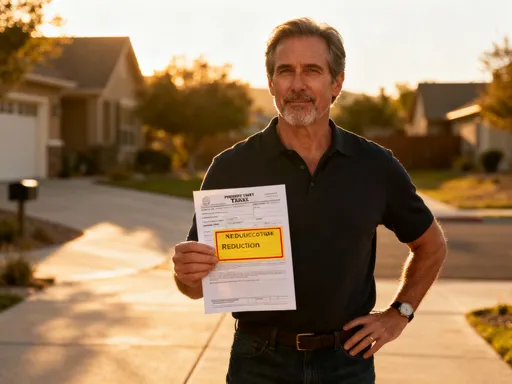
How I Cut My Property Tax Bill Without Breaking a Sweat
You’re not imagining it—property taxes keep climbing every year. I felt the same pinch until I dug into the system and found overlooked strategies that actually work. This isn’t about loopholes or risky moves. It’s a real, professional look at how smart cost analysis can protect your wallet. If you own property, what you don’t know could be costing you more than you think. Many homeowners accept their tax bills without question, assuming the number is final. But the truth is, assessments are often flawed, and the process allows room for correction. With a little research and the right approach, reducing your property tax burden is not only possible—it’s within reach for anyone willing to take a closer look.
The Silent Drain: Understanding What Property Tax Really Costs You
Property tax is more than an annual payment—it’s a recurring financial obligation that directly impacts your long-term wealth. Unlike one-time expenses, property taxes compound over time, quietly eroding your home equity and reducing your net worth. For many families, this cost grows faster than income, making it harder to manage household budgets. Consider a home valued at $400,000 with an effective tax rate of 1.5%. That’s $6,000 per year, or $180,000 over 30 years—without accounting for inflation or rising rates. Even a 10% overvaluation could mean paying an extra $18,000 over the same period. These figures aren’t hypothetical; they reflect the real cost of inaction.
What makes property tax especially insidious is its invisibility. Most homeowners receive a bill once or twice a year and pay it without scrutiny. There’s no itemized receipt, no detailed explanation of how the amount was calculated. Yet, this single expense can surpass mortgage interest, insurance, and maintenance combined over time. The impact is felt most acutely by fixed-income households, retirees, and long-term residents in gentrifying neighborhoods, where property values rise faster than wages. In these cases, tax increases can force difficult choices—delaying home repairs, cutting back on essentials, or even considering relocation.
The root of the problem lies in perception. Many people view property tax as an unavoidable cost, like death or weather. But unlike those forces, tax assessments are human-made and subject to error, oversight, and correction. Municipalities rely on automated systems, outdated records, and broad assumptions when valuing homes. These methods often fail to reflect individual property conditions, market fluctuations, or neighborhood changes. As a result, millions of homeowners overpay simply because they don’t know how to challenge the system. Awareness is the first step toward change. Once you understand that your tax bill is not set in stone, you begin to see it as a negotiable expense—one that can be managed with knowledge and effort.
The financial benefit of reducing your tax burden extends beyond immediate savings. Lower annual payments mean more disposable income, greater flexibility in budgeting, and increased capacity to save or invest. Over time, these small gains accumulate, contributing to long-term financial stability. For example, saving $500 per year at a 5% annual return could grow to over $40,000 in 30 years. This compounding effect transforms a simple tax reduction into a powerful wealth-building tool. The key is recognizing that property tax is not just a cost—it’s a lever you can control.
Behind the Numbers: How Assessments Work (And Where Mistakes Happen)
To challenge your property tax bill, you must first understand how it’s created. Municipal assessors are responsible for estimating the market value of every property in their jurisdiction. These valuations form the basis for tax calculations, typically using a formula that multiplies assessed value by the local tax rate. While the process sounds straightforward, it’s far from perfect. Assessors rely on mass appraisal techniques—statistical models that analyze recent sales, property characteristics, and neighborhood trends. These models apply broad assumptions to thousands of homes, which means individual details often get overlooked.
One of the most common sources of error is outdated or inaccurate data. For example, your home’s square footage might be recorded from a decades-old survey that doesn’t reflect renovations or structural changes. Features like garages, decks, or finished basements may be missing from official records. Even minor discrepancies—such as an incorrect number of bathrooms or an outdated lot size—can skew the final valuation. Because assessors rarely conduct physical inspections, they depend on third-party databases, satellite imagery, and self-reported information, all of which are prone to mistakes. These errors tend to favor higher valuations, increasing tax revenue for local governments.
Another issue is property classification. Homes are categorized based on use—single-family, multi-unit, vacant land, etc.—and each category has different assessment rules. If your property is misclassified, it could be taxed at a higher rate than necessary. For instance, a home used as a primary residence might be incorrectly labeled as an investment property, leading to a higher assessment. Similarly, zoning changes or recent improvements in the neighborhood can trigger reassessments that don’t accurately reflect your home’s condition or market position.
Market timing also plays a role. Assessments are often based on sales data from a specific period, which may not reflect current market conditions. In a cooling market, for example, home values may be declining, but assessments might still reflect peak prices from the previous year. Conversely, in a rapidly appreciating area, your neighbors may be selling at higher prices, pulling up your valuation even if your home hasn’t changed. These timing mismatches can create unfair disparities between actual market value and assessed value.
The takeaway is clear: assessments are estimates, not facts. They are generated using imperfect data and generalized models. While the system aims for fairness, it doesn’t guarantee accuracy for every individual property. This gap between official valuation and true market value is where opportunities for savings exist. By identifying and correcting errors, homeowners can bring their tax burden in line with reality. The process begins with understanding how the system works—and recognizing that mistakes are not only possible but common.
The Power of Comparison: Benchmarking Your Property Against Neighbors
One of the most effective ways to determine if your property is over-assessed is to compare it with similar homes in your area. This method, known as comparative market analysis, doesn’t require advanced expertise—just access to public records and a willingness to look closely. The principle is simple: if homes comparable to yours have lower assessed values, your assessment may be too high. This discrepancy can serve as the foundation for a successful appeal.
Most local tax assessor offices maintain online databases that list property details, including assessed value, square footage, year built, and number of bedrooms and bathrooms. These records are publicly available and free to access. Start by identifying three to five homes within a half-mile radius that match your property in size, age, and style. Pay attention to key features like lot size, condition, and recent upgrades. If these comparable homes have significantly lower assessments, it suggests your valuation may be out of alignment.
It’s important to control for differences. A home with a finished basement, updated kitchen, or larger yard should naturally have a higher value. But if your home lacks these features yet carries a higher assessment, that’s a red flag. For example, suppose your 2,000-square-foot home is assessed at $450,000, while a nearly identical neighbor’s home—same size, same age, same layout—is assessed at $410,000. That $40,000 difference could translate to hundreds of dollars in excess taxes each year. Such disparities are not uncommon and often go unnoticed without direct comparison.
Beyond individual comparisons, look at neighborhood trends. Are most homes in your area assessed at a similar rate per square foot? If your home falls significantly above the average, it may be an outlier. Some municipalities publish assessment-to-sale-price ratios, which show how closely assessed values align with actual sale prices. A ratio above 100% indicates that properties are being over-assessed on average, strengthening your case for appeal. Even without this data, a consistent pattern of lower assessments among peers can support your argument.
This type of analysis shifts the conversation from opinion to evidence. Instead of saying, “I think my tax bill is too high,” you can present a documented case showing that similar properties are taxed at lower levels. This data-driven approach is far more persuasive to review boards and assessors. It also helps you avoid emotional arguments and focus on objective facts. The goal is not to argue against the system, but to ensure your property is treated fairly within it. When you have proof that your assessment doesn’t match the market, you’re no longer disputing a number—you’re correcting an error.
When to Appeal—And What It Actually Takes to Win
Filing a property tax appeal is not a matter of simply disagreeing with your bill. It’s a formal process that requires preparation, timing, and solid evidence. The first step is knowing when to act. Most jurisdictions allow appeals within a specific window after assessments are released—often 30 to 60 days. Missing this deadline means waiting another year, during which you’ll continue to pay the higher rate. Therefore, prompt action is essential. Set a calendar reminder as soon as you receive your assessment notice, and begin gathering documentation immediately.
The foundation of any successful appeal is evidence. You’ll need to demonstrate that your assessed value exceeds your property’s true market value. This can be done through recent comparable sales, known as “comps,” from your neighborhood. These should be homes similar in size, condition, and location that have sold within the past six to twelve months. Sales prices provide the strongest proof of market value, especially if they are lower than your assessed amount. If your home hasn’t sold recently, you can still use nearby transactions to build your case.
In addition to sales data, include photographs of your property, particularly if it has flaws not reflected in the assessor’s records—such as needed repairs, structural issues, or outdated systems. A professional appraisal can strengthen your position, though it’s not always necessary. Some jurisdictions accept informal estimates from licensed real estate agents. The key is presenting a clear, consistent narrative that your home is worth less than the assessed value.
When submitting your appeal, follow the required procedures exactly. This may involve filling out a form, paying a small filing fee, and attending a hearing. At the hearing, remain calm and factual. Present your evidence in an organized manner, referencing specific data points and comparisons. Avoid emotional appeals or accusations. Instead, focus on discrepancies and documentation. Many homeowners are surprised to learn that assessors often accept reductions when presented with compelling evidence—especially if the error is obvious.
Persistence matters. If your initial appeal is denied, you may have the right to a second review or an appeal to a higher board. Some jurisdictions allow for informal negotiations before a formal hearing, which can lead to quicker resolutions. In many cases, simply showing that you’ve done your homework is enough to prompt a reassessment. The goal is not to win a battle, but to correct a mistake. With preparation and patience, a successful appeal can result in significant savings—sometimes hundreds or even thousands of dollars annually—with minimal effort.
Hidden Savings: Exemptions and Relief Programs You Might Qualify For
Beyond appealing your assessment, another powerful way to reduce your property tax bill is through exemptions and relief programs. These are not secret benefits or special favors—they are legitimate provisions built into most local tax codes. Yet, millions of eligible homeowners fail to claim them, leaving money on the table. The reason? Lack of awareness and the assumption that such programs don’t apply to them.
One of the most common exemptions is the homestead exemption, available in many states for primary residences. This exemption reduces the taxable value of your home by a fixed amount or percentage. For example, a $50,000 homestead exemption on a $400,000 home lowers the taxable value to $350,000, resulting in immediate savings. To qualify, you typically need to occupy the home as your principal residence and file an application with your local assessor’s office. The process is usually simple, requiring only proof of residency and a completed form.
Age-based exemptions are another valuable option. Many municipalities offer reduced assessments or tax freezes for homeowners over 65. These programs help seniors on fixed incomes manage rising costs. In some cases, the exemption increases with age or is based on income level. Disabled veterans may also qualify for significant reductions, sometimes up to 100% of their tax liability, depending on the state. These benefits are not automatic—you must apply and provide documentation such as military discharge papers or disability certification.
Other potential exemptions include those for surviving spouses, low-income homeowners, and properties used for agriculture or conservation. Some cities offer temporary relief during economic hardship or natural disasters. While eligibility varies by location, the principle is the same: if you meet the criteria, you should claim the benefit. The application process is typically straightforward, and the savings can be substantial. For instance, a veteran receiving a $100,000 exemption on a $350,000 home could save over $1,000 per year at a 1.5% tax rate.
The key is proactive research. Visit your local tax assessor’s website or call their office to inquire about available programs. Don’t assume you don’t qualify—many people are surprised to learn they are eligible. Once approved, most exemptions renew automatically, providing ongoing savings year after year. These programs are designed to be accessible, not hidden. By taking the time to explore what’s available, you can turn overlooked opportunities into lasting financial relief.
Professional Help vs. DIY: Weighing Cost and Value
When considering a property tax appeal, one of the biggest decisions is whether to hire a professional or handle it yourself. Tax consultants and appraisal firms often advertise significant savings, sometimes claiming they can cut bills in half. While some are reputable, others charge high fees for results you could achieve on your own. Understanding the true cost-benefit is essential before making a commitment.
Professional representatives typically charge a percentage of the first year’s savings—often 25% to 50%. If they save you $1,000, you might pay $250 to $500. While this seems reasonable, consider that the reduction usually applies to future years as well. Over ten years, $1,000 in annual savings totals $10,000, of which the consultant takes a cut from only the first year. Still, that initial fee can be substantial, and there’s no guarantee of success. Some firms only take cases with high potential savings, leaving average homeowners underserved.
On the other hand, a DIY approach requires time and effort but costs nothing upfront. With access to public records, online tools, and free resources from local government websites, most homeowners can gather the necessary evidence. The process involves researching comparables, documenting property details, and following appeal procedures—all of which are manageable with careful attention. Many jurisdictions even provide step-by-step guides and sample letters to help applicants.
The real advantage of going it alone is control. You decide when to file, what evidence to submit, and how to present your case. There’s no middleman taking a portion of your savings. Additionally, handling the appeal yourself builds knowledge that can be used in future years. You’ll understand the system better, recognize when reassessments occur, and know how to respond quickly. This long-term empowerment is often more valuable than the immediate savings.
That said, professionals can be worth it in complex cases—such as large estates, commercial properties, or situations involving legal disputes. They may also have established relationships with assessors or deeper knowledge of local procedures. For the average homeowner with a single-family residence, however, the DIY route is often just as effective and far more cost-efficient. The decision ultimately depends on your comfort level, available time, and the complexity of your property’s assessment.
Long-Term Strategy: Turning One-Time Wins Into Ongoing Savings
Winning a property tax reduction is a meaningful achievement, but the work doesn’t end there. To maximize long-term benefits, you must adopt a proactive, ongoing strategy. Assessments are not static—they can change annually or after major renovations, sales, or neighborhood developments. Without monitoring, your hard-won savings could be reversed in a future reassessment.
The first step is annual review. Make it a habit to examine your assessment notice each year, even if you’re satisfied with your current rate. Compare it to previous years and check for sudden increases. A jump in value without a corresponding improvement to your home may indicate an error or a broader market adjustment that doesn’t reflect your property’s condition. Early detection allows you to respond quickly, either through informal inquiry or formal appeal.
Second, maintain organized records. Keep copies of past appeals, appraisal reports, photographs, and correspondence with the assessor’s office. These documents serve as a reference point and can streamline future challenges. If you’ve already won a reduction, that history strengthens your position in subsequent appeals. Assessors are more likely to accept adjustments when they see a consistent pattern of accurate valuation.
Third, stay informed about policy changes. Local governments occasionally revise assessment methods, introduce new exemptions, or adjust tax rates. Signing up for newsletters from your tax assessor’s office or attending community meetings can keep you updated. Some jurisdictions offer online portals where you can track assessment trends and receive alerts about upcoming changes.
Finally, treat property tax like any other managed expense. Just as you review insurance policies, utility bills, and subscriptions, include your tax bill in your annual financial review. This mindset shift—from passive payer to active manager—transforms property tax from a fixed cost into a variable one that you can influence. Over time, consistent attention can lead to sustained savings, protecting your home equity and improving your financial well-being. The most successful homeowners aren’t those who avoid taxes, but those who understand and manage them wisely.
Reducing property tax isn’t about gaming the system—it’s about using it as intended. With clear analysis, informed decisions, and a little initiative, what once felt like an unavoidable cost becomes a controllable one. The smartest financial moves aren’t always flashy, but they’re the ones that quietly build stability year after year.