This Is What Lagos Looks Like When No One’s Watching
You know that feeling when a city surprises you? Lagos wasn’t on my radar—until I arrived. What I found wasn’t chaos, but rhythm: vibrant streets, golden sunsets over the Atlantic, and eyes that tell stories without words. This isn’t just travel—it’s a viewing experience that sticks to your soul. I didn’t just see Lagos; I felt it, frame by frame. The city pulses with an energy that resists tidy summaries, revealing itself not in brochures or guidebooks, but in quiet glances, fleeting moments, and unguarded expressions. It’s a place where life unfolds without permission, and beauty emerges not despite the noise, but because of it. To witness Lagos is to learn how to watch differently.
The First Glimpse: Landing in Lagos with No Expectations
Stepping off the plane at Murtala Muhammed International Airport, there’s no red carpet, no polished welcome arch, no piped-in music. Instead, you’re met with the hum of conversation in Yoruba, English, and pidgin, the scent of fried plantain and diesel, and a line of drivers holding handwritten signs with names spelled phonetically. There’s no pretense here—only arrival, real and unfiltered. The city doesn’t introduce itself gently; it announces its presence in waves: the press of warm air, the blur of movement beyond the terminal glass, the chorus of horns already echoing from the distant highway.
Most travelers arrive with a mental checklist—traffic, crowds, noise—but Lagos subverts expectation the moment you clear immigration. Instead of disorder, you begin to sense pattern. The flow of people, though dense, follows an internal logic. Vendors know their lanes, taxis their routes, and pedestrians their rhythms. This is not chaos, but coordination shaped by necessity and time. The city operates on what feels like controlled improvisation, a jazz composition played at full volume, where every note has purpose.
What strikes first is the vitality. Unlike cities that guard their energy behind glass towers or curated experiences, Lagos wears its life on the surface. Children wave from motorbike taxis, women balance baskets on their heads with effortless grace, and men in crisp agbadas stride through the heat like diplomats of everyday dignity. It’s a reminder that urban energy isn’t always about efficiency—it can be about endurance, resilience, and joy.
To see Lagos clearly, one must first shed the lens of comparison. This is not a failed version of Western cities; it is a fully realized expression of African urban life, shaped by history, migration, and innovation. The headlines often reduce Lagos to its challenges—congestion, infrastructure gaps, density—but they miss the deeper truth: that a city of over 15 million people functions at all is a marvel. The real story isn’t in what’s missing, but in how much is present—community, creativity, and an undeniable will to move forward.
Island Light: Chasing Sunsets on Victoria Island and Banana Island
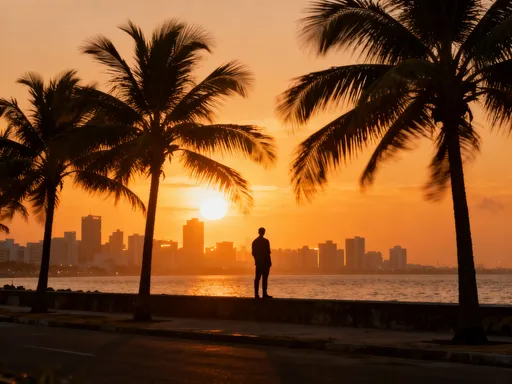
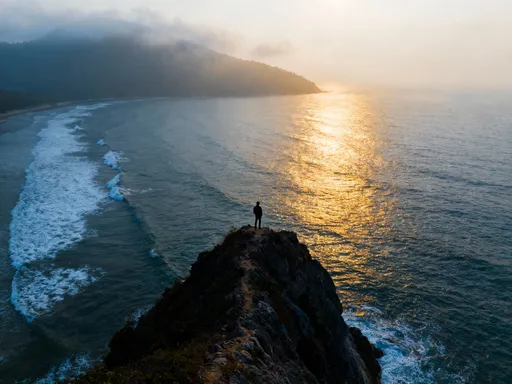
If Lagos has a golden hour, it belongs to the islands. As the sun dips toward the Atlantic, the skyline of Victoria Island transforms. Glass towers catch fire in the low light, reflections ripple across lagoon waters, and the sky becomes a canvas of tangerine, rose, and deep violet. It’s a daily spectacle, free and unadvertised, visible from rooftops, quiet streets, and waterfront parks where locals gather to breathe after the day’s heat.
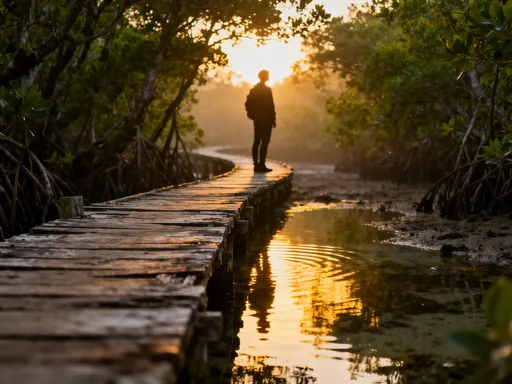
One of the most powerful vantage points is the boardwalk at the Lekki Conservation Centre. Here, amid mangroves and bird calls, the city feels both distant and intimate. As the light fades, the sounds of traffic soften, replaced by the rustle of leaves and the occasional splash of a monitor lizard slipping into the water. The contrast is striking—nature and metropolis coexisting, each borrowing beauty from the other. It’s a reminder that Lagos isn’t just concrete and noise; it’s also wetlands, wildlife, and quiet resilience.
Further west, along Ibrahim Taiwo Road or the quieter edges of Banana Island, the sunset paints facades in warm hues, turning ordinary buildings into silhouettes of elegance. Rooftop lounges offer curated views—chilled music, cocktails, Instagrammable moments—but the most authentic experiences happen by accident: a pause at a traffic light just as the sun hits the water, or a chance glance from a balcony as neighbors call to each other across compounds.
What makes these moments special isn’t just the light, but the awareness that they’re fleeting. Lagos doesn’t pause for beauty; beauty emerges in spite of the motion. To witness it, you must be present, not just passing through. The golden hour teaches patience—the willingness to wait, to watch, to let the city reveal itself in its own time. And when it does, the reward is not a photograph, but a feeling: that you’ve seen something true, something unposed.
Street Theater: Observing Life Unfold in Yaba and Oshodi Markets
Markets are the beating heart of Lagos, and none pulse louder than Yaba and Oshodi. These are not shopping destinations in the Western sense—they are ecosystems of survival, innovation, and social exchange. To walk through them is to step into a living film, where every stall, shout, and gesture contributes to a narrative decades in the making.
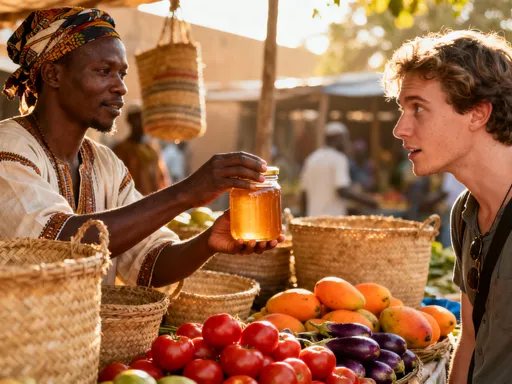
In Yaba, the air thrums with commerce. Electronics spill from tables—phones, chargers, headphones—stacked in chaotic symmetry. Students from nearby universities haggle over prices, their backpacks slung over shoulders, while vendors call out deals in rhythmic cadence. Nearby, tailors sit at sewing machines, fabric patterns spread like maps, stitching garments that will be worn the next day. It’s a cycle of instant creation and consumption, where fashion, technology, and education intersect on crowded sidewalks.
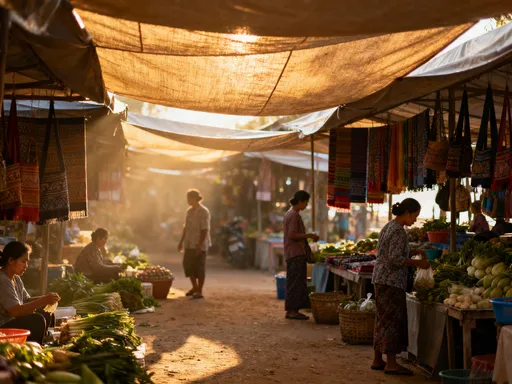
Oshodi, meanwhile, is a symphony of scale. The market stretches for blocks, a labyrinth of goods piled high: shoes, textiles, kitchenware, auto parts. The noise is constant—honking danfos (yellow minibuses), shouting traders, the clatter of goods being unloaded. Yet within the apparent disorder, there’s order. Vendors know their zones, customers know their routes, and the flow of people, though dense, rarely stalls. It’s a masterclass in urban efficiency, built not from blueprints, but from repetition and mutual understanding.
What makes these spaces profound is not their size, but their humanity. To observe without rushing, without photographing, is to see the dignity in labor—the woman balancing a tray of goods on her head, the man repairing a sandal with focused precision, the children playing between stalls, weaving through legs like fish in a stream. These are not performances for tourists; they are lives lived fully, openly, without apology.
There’s an unspoken etiquette to watching in these spaces. Staring is intrusive; quiet presence is respectful. A smile, a nod, a brief exchange in pidgin—these small gestures open doors. And when you slow down, you begin to notice the details: the way light filters through a canopy of plastic sheets, the rhythm of a vendor’s hands as she counts change, the shared laughter between neighbors after a long day. These are the moments that define Lagos—not in headlines, but in the quiet hum of daily life.
Art as a Lens: Viewing Lagos Through Galleries and Street Murals
If the streets are Lagos’s body, its art is its soul. Scattered across the city are spaces where creativity speaks louder than noise. The Nike Art Gallery in Lekki is one of the most celebrated—four floors of paintings, sculptures, textiles, and beadwork, curated by Chief Nike Davies-Adetona, a national treasure of Nigerian art. Walking through its halls is like flipping through a living history book: portraits of elders, abstract expressions of identity, and vibrant depictions of Yoruba mythology.
But art in Lagos isn’t confined to galleries. It spills onto walls, alleyways, and overpasses. Along Freedom Way in Ikeja, murals stretch across concrete, depicting faces of activists, musicians, and everyday heroes. These are not advertisements, but declarations—statements of pride, resistance, and hope. A mural might show Fela Kuti mid-saxophone solo, or a market woman holding a basket of fruit like a crown. Each image reframes the city’s narrative, shifting focus from struggle to strength.
Street art in Lagos is also a form of reclaiming space. In neighborhoods where infrastructure lags, color becomes protest, beauty becomes defiance. A painted wall transforms a dull corner into a destination. Children stop to point, couples take selfies, elders pause to remember. Art doesn’t just decorate—it connects, heals, and inspires.
For travelers, engaging with Lagos’s art scene is a way to see the city through local eyes. It’s possible to visit studios, attend gallery openings, or join walking tours that highlight public art. The key is to approach with respect—ask before photographing, listen to the stories behind the work, and support artists directly when possible. These interactions aren’t transactions; they’re exchanges of value, where attention becomes currency.
Art teaches us that Lagos is not a monolith. It is many cities at once—traditional and modern, loud and quiet, struggling and thriving. And through its creative expressions, the city says: See me. I am more than the sum of your assumptions.
Waterfront Perspectives: Boat Rides from Lekki to Ikorodu
To understand Lagos, you must see it from the water. From the lagoons, the city reveals a different geometry—floating homes, fishing canoes, mangrove forests that buffer the mainland from the sea. A boat ride from Lekki to Ikorodu offers a rare vantage: one where the density of the city softens into pattern, and the noise gives way to the lap of waves.
These waterways are not just scenic; they are lifelines. Communities like Makoko, often called the “Venice of Africa,” are built on stilts above the lagoon. Homes, schools, and shops rise from the water, connected by wooden walkways. Children paddle to school in canoes, fishermen mend nets on floating platforms, and women cook over stoves balanced on planks. It’s a way of life shaped by adaptation, resilience, and deep connection to the environment.
Tourists can access these views through small local operators who offer guided trips. These aren’t luxury cruises; they’re modest outings in wooden canoes or motorized skiffs, led by captains who know the currents like their own breath. The experience is immersive—not voyeuristic. Visitors are encouraged to observe quietly, to learn, and to support the community through respectful tourism.
From the water, Lagos feels less like a city and more like a network—a web of human activity stitched together by trade, tradition, and tides. The skyline of Victoria Island, seen from a distance, glimmers like a mirage, a reminder of the disparities within the city. But it also shows how close these worlds are, separated not by miles, but by perspective.
Water changes how we see. It slows time, softens edges, and reveals connections that land obscures. In Lagos, the lagoons are not boundaries—they are bridges, linking past and present, wealth and resilience, chaos and calm.
Elevated Views: Rooftops, Malls, and Hidden Vantage Points
Height offers clarity. In a city that moves at ground level with relentless energy, rising above the fray provides a moment of stillness. The terrace of the Eko Hotel, one of Lagos’s oldest landmarks, is a classic vantage. From here, you can see the curve of the coastline, the flow of traffic along Adetokunbo Ademola Street, and the slow drift of clouds over the Atlantic. It’s a place to sip tea, watch the world turn, and reflect on the scale of human endeavor.
But the best views aren’t always in obvious places. The upper floors of Oshodi Mall, often overlooked by tourists, offer a raw, unfiltered panorama. From the rooftop parking lot, you can see the sprawl of the market below, the dance of danfos as they jostle for space, and the distant haze of the city stretching toward the horizon. There’s no music, no seating, no price of admission—just observation, pure and simple.
Other hidden spots include the back terraces of cafes in Ikoyi, the quiet stairwells of older office buildings, or the edges of university campuses where fences give way to open sightlines. These are not tourist attractions; they’re local perches, discovered through curiosity and conversation. The reward isn’t comfort, but authenticity.
What these elevated spaces offer is not just a better view, but a different mindset. From above, the noise becomes rhythm, the crowds become patterns, the chaos becomes choreography. You begin to see Lagos not as a problem to be solved, but as a system to be understood. And in that understanding, there’s respect.
For travelers, finding these vantage points requires patience and humility. Ask locals for advice, follow quiet alleys, and be willing to wander without a destination. The best views in Lagos aren’t marked on maps—they’re earned through presence.
The Mindset of Seeing: How Lagos Rewires Your Visual Habits
Lagos doesn’t reward the glance. It demands attention. To truly see this city is to slow down, to resist the urge to capture and instead to absorb. In an age of photography and social media, where every moment is framed for sharing, Lagos teaches a different lesson: that some things are felt, not saved.
The act of watching—deep, patient, unhurried observation—becomes a form of respect. It’s a way of saying: I see you. I am here with you. This isn’t passive tourism; it’s active presence. When you stop trying to photograph the perfect shot and instead let the city unfold around you, something shifts. You begin to notice the rhythm in the chaos, the dignity in the grind, the beauty in the ordinary.
This mindset extends beyond travel. It becomes a philosophy: to see not just with eyes, but with intention. In Lagos, you learn that a glance can be more powerful than a thousand photos. A shared smile with a vendor, a moment of silence on a rooftop, the sound of waves at dusk—these are the impressions that last.
Travel is often sold as a series of highlights—a checklist of sights, tastes, and experiences. But Lagos resists that model. It invites you not to collect moments, but to live inside them. To watch a city that doesn’t perform for cameras, but simply lives, loudly and proudly, on its own terms.
And in that watching, you change. Your sense of pace slows. Your tolerance for uncertainty grows. Your appreciation for resilience deepens. You begin to see not just Lagos, but the world, differently.
The final lesson is this: the best views are not the ones you take, but the ones that take you in.
Lagos doesn’t perform—it lives. And if you learn to watch, not just look, it reveals itself in layers. This city isn’t about perfect postcard shots; it’s about the glance that lingers, the moment that imprints. The real magic? Realizing that the best views aren’t seen with your eyes, but felt through presence. Watch Lagos right, and you’ll carry its rhythm long after you leave.