This Is Why Jeonju’s Architecture Is Pure Instagram Gold
You know that feeling when a place looks too good to be real? That was me in Jeonju. Traditional hanok rooftops stretch like waves across the hills, wooden eaves curving into the sky, and alleyways so photogenic you’ll forget to blink. I came for the food, but I stayed for the architecture — every courtyard, tile, and painted beam feels like stepping into a Korean drama. If you’re chasing beauty with soul, this city delivers. It’s not just the preserved historic homes or the charming streets lined with paper lanterns — it’s the way light dances across wooden verandas in the late afternoon, how moss creeps gently over centuries-old stone walls, and how each turn reveals a new composition worthy of a frame. Jeonju’s architecture doesn’t shout for attention; it whispers, inviting you to pause, observe, and appreciate. For travelers who value authenticity and visual harmony, this city offers a rare blend of cultural depth and aesthetic grace — one that lingers long after the camera is put away.
First Glimpse: Walking Into a Living Postcard
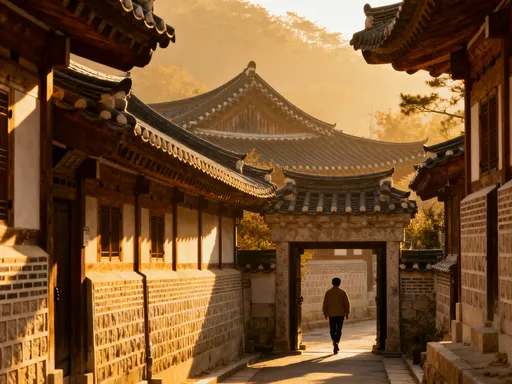
Arriving in Jeonju Hanok Village feels like stepping into a carefully preserved dream. As visitors pass beneath the low wooden gate at the entrance, the modern world fades behind them. The village unfolds in gentle layers — rows of tiled roofs cascading down the hillside, their curved edges echoing the contours of the surrounding landscape. Unlike reconstructed historical sites that feel staged, Jeonju’s hanok neighborhood remains a living, breathing community where tradition and daily life coexist. More than 800 traditional Korean houses stand within this district, making it one of the largest and best-preserved hanok villages in South Korea. The scale is intimate, never overwhelming, allowing visitors to walk slowly, absorb details, and feel the rhythm of a place shaped by centuries of thoughtful design.
What makes the first impression so powerful is the harmony between architecture and nature. Trees rise between rooftops, their branches framing gabled ends like living picture frames. Stone pathways wind beneath wooden eaves, guiding footsteps through quiet lanes where laundry flutters gently above and the scent of roasted sweet potatoes drifts from a nearby stall. This integration isn’t accidental — traditional Korean architecture emphasizes balance with the natural world, a principle known as baesanimsu, meaning “back to mountain, face to water.” In Jeonju, homes are nestled against the slope of Gyonam Mountain, with small streams and gardens positioned to invite light and airflow. This deliberate siting contributes to the village’s serene atmosphere, making it feel timeless and grounded.
From a visual storytelling perspective, the village offers endless opportunities. The repetition of rooflines creates natural leading lines in photographs, drawing the eye across the scene. The soft gray of clay tiles contrasts beautifully with the warm wood of doors and beams, while paper-covered windows glow gently in the sunlight. These qualities make Jeonju instantly recognizable in social media feeds — not because it’s flashy, but because it feels genuine. Travelers aren’t just capturing images; they’re documenting an experience of calm, beauty, and cultural continuity. For family-oriented visitors, especially women between 30 and 55 who value meaningful travel, Jeonju offers a rare chance to slow down and reconnect — with history, with artistry, and with the simple joy of being present in a place that feels truly alive.
Hanok Reimagined: Where Tradition Meets Modern Aesthetic
One of the most remarkable aspects of Jeonju’s architectural charm is how tradition has been thoughtfully adapted for modern life. Many of the hanok homes are no longer just private residences — they’ve been transformed into cafés, guesthouses, cultural centers, and artisan shops, all while preserving their essential character. This careful repurposing ensures the village remains vibrant rather than becoming a museum exhibit frozen in time. Visitors can sip barley tea in a 200-year-old home, stay overnight in a restored family compound, or browse handmade crafts in a converted study hall — experiences that deepen the connection to Korean heritage.
These modern uses highlight the enduring functionality of traditional design. The ondol heating system, for example, is still in use in many guesthouses. This ancient method circulates warm air beneath stone floors, providing even, comfortable heat — a feature especially appreciated during Korea’s chilly winters. Similarly, the daecheong maru, a raised wooden veranda that connects rooms and opens to the courtyard, serves as a transitional space perfect for relaxing with a book or enjoying a quiet conversation. Its open design promotes airflow in summer and allows natural light to flood the interior, demonstrating how form and function were seamlessly integrated in Korean architecture long before the term “sustainable design” existed.
Another distinctive feature is the daenggi-shaped roof bracket, named after a traditional hair ornament worn by young girls. These curved wooden supports are both structural and decorative, adding a delicate, feminine elegance to the eaves. Their presence throughout the village adds visual rhythm and cultural symbolism, reminding visitors that beauty in Korean design often carries deeper meaning. When these elements are preserved in modern adaptations, they create spaces that feel both authentic and livable. A café with an ondol-heated seating area or a guesthouse with a private daecheong maru becomes more than just a place to visit — it becomes a place to experience, to rest, and to understand.
For travelers seeking depth in their journeys, this blend of old and new is deeply satisfying. It shows that heritage doesn’t have to be preserved behind glass — it can evolve, adapt, and remain relevant. In Jeonju, tradition isn’t a burden; it’s a living language spoken through wood, tile, and light. This thoughtful balance resonates particularly with mature travelers who appreciate craftsmanship, history, and the quiet dignity of places that honor their past while embracing the present.
The Magic of Light and Shadow in Narrow Alleys
As the sun moves across the sky, Jeonju’s alleyways transform into ever-changing galleries of light and shadow. In the early morning, soft golden rays slant across stone paths, casting long silhouettes of wooden gates and tree branches. By midday, sunlight filters through paper doors, creating a gentle diffusion that warms the interiors of hanok homes. But it’s during golden hour — the hour before sunset — that the village truly glows. The low-angle light catches the texture of clay tiles, highlights the grain of wooden beams, and bathes whitewashed walls in a warm, honeyed hue. For photographers and visual storytellers, this is when the magic happens.
One of the most photographed spots is the gently sloping alley near Gyeonggijeon Shrine, where a row of hanok homes lines the path like sentinels. At sunset, the rooftops catch the light from behind, creating a silhouette effect that emphasizes their rhythmic, wave-like pattern. Another favorite is the narrow lane behind Jeonju Museum of Art, where sunlight reflects off a curved wall, creating a natural spotlight on the path below. These moments are fleeting, lasting only minutes, which is why timing is so important for capturing the village at its most atmospheric.
While popular spots can draw crowds, especially during peak tourist seasons, quieter corners are never far away. Venturing slightly off the main routes — down a side path or around a bend — often leads to intimate scenes: a single lantern hanging by a door, a cat curled on a sunlit step, or a grandmother watering flowers in a private courtyard. These unposed moments often make for the most memorable images, not because they’re perfectly composed, but because they feel real. For travelers who want to avoid the hustle without sacrificing beauty, visiting in the late afternoon and staying into early evening offers the best of both worlds — golden light and thinner crowds.
Understanding how light interacts with architecture enhances not only photography but also the overall experience. It encourages visitors to move slowly, to observe how shadows shift and surfaces change with the time of day. This mindfulness aligns with the Korean concept of heung — a joyful, spontaneous appreciation of beauty in the moment. Whether capturing an image or simply pausing to watch the light play across a wall, travelers in Jeonju are invited to engage with their surroundings on a deeper, more reflective level.
Hidden Courtyards and Secret Gardens: Off-the-Beaten-Path Beauty
Beyond the main alleys and well-known landmarks, Jeonju reveals quieter, more personal spaces that offer a deeper connection to its architectural soul. These hidden courtyards and secret gardens are often part of private homes that open their doors for cultural tours, tea ceremonies, or seasonal events. Unlike the more commercialized areas, these spaces maintain a sense of intimacy and authenticity, allowing visitors to experience hanok life as it was originally intended — centered around family, nature, and quiet contemplation.
One such gem is a restored family residence near the village’s northern edge, where a small courtyard is surrounded by four low buildings connected by wooden corridors. A stone well sits at the center, and a single plum tree blooms in early spring, scattering petals across the flagstones. This home, now operated as a cultural experience space, allows guests to sit on the daecheong maru, sip traditional tea, and listen to stories about the family who once lived there. The atmosphere is hushed, reverent — a world away from the busier lanes just minutes away.
Another tranquil spot is a tucked-away tea house tucked into a hillside, accessible by a narrow stone staircase. From the outside, it’s nearly invisible, blending seamlessly into the landscape. Inside, the space is small but exquisitely detailed — hand-carved window frames, a charcoal brazier for heating water, and a view of a miniature rock garden visible through a paper door. Here, visitors can participate in a traditional tea ritual, learning about the symbolism of each movement and utensil. These experiences go beyond sightseeing; they become moments of cultural immersion, offering insight into the values of harmony, simplicity, and respect that underlie Korean aesthetics.
For photographers, these quieter locations offer unique opportunities to capture images without crowds or distractions. A single figure in traditional dress walking through a courtyard, steam rising from a teacup, or sunlight filtering through a lattice window — these are the kinds of images that convey mood and meaning, not just beauty. However, it’s important to practice respectful photography etiquette in these spaces. Many are private or semi-private, and some residents still live in the surrounding homes. Always ask for permission before photographing people, avoid blocking pathways, and keep voices low. By being mindful, visitors honor the living nature of the village and help preserve its peaceful character for future generations.
Color, Craft, and Detail: The Art Behind the Facades
At first glance, Jeonju’s hanok homes may appear simple, with their muted tile roofs and wooden frames. But a closer look reveals a wealth of intricate craftsmanship and symbolic meaning. One of the most striking elements is dancheong — the traditional painted woodwork that adorns beams, brackets, and eaves. These vibrant patterns, typically in red, green, blue, black, and white, are not merely decorative. Each color carries philosophical significance: red for fire and vitality, blue for wood and growth, black for water and wisdom. Together, they represent the five elements of Korean cosmology and are believed to protect the building and its inhabitants.
The patterns themselves are deeply symbolic. Swirling clouds, lotus flowers, and geometric motifs are carefully hand-painted by skilled artisans, a practice that has been passed down for generations. In Jeonju, many of these details have been preserved or restored with great care, ensuring that the artistry remains visible to modern eyes. Walking through the village, one can spot dancheong on temple gates, study halls, and even some private homes, each variation reflecting the status and purpose of the building. For travelers who appreciate handmade beauty, these details offer a powerful reminder of the human touch behind every structure.
Other decorative elements include engraved wood panels, ceramic roof tiles with stamped patterns, and ornate door handles shaped like auspicious animals. Even the layout of a home follows symbolic principles — the main house positioned at the back for privacy, the kitchen placed to the side to prevent fire from spreading, and the courtyard designed to collect positive energy, or gi. Every choice, from color to placement, reflects a worldview that values balance, protection, and harmony with nature.
Sharing these details on social media can be a way of honoring the culture, not just showcasing its beauty. A close-up photo of dancheong, accompanied by a brief explanation of its meaning, invites followers to look deeper. It transforms a simple image into a story — one about craftsmanship, belief, and continuity. For family-oriented travelers, especially those who enjoy educating their children about world cultures, these moments of discovery are invaluable. They turn a vacation into a meaningful exchange, where beauty is not just seen but understood.
Beyond the Village: Unexpected Architectural Gems in the City
While the hanok village is Jeonju’s most famous attraction, the city’s architectural identity extends far beyond its historic core. In the downtown area, modern buildings incorporate traditional elements in thoughtful ways, creating a dialogue between past and present. The Jeonju Museum of Art, for example, features a contemporary design with a sweeping roofline inspired by hanok architecture. Its curved eaves and layered forms echo the village’s skyline, bridging the gap between old and new. Similarly, the city’s central library includes wooden latticework and natural materials that reference traditional craftsmanship while serving a modern public function.
Other examples include boutique galleries housed in renovated hanok buildings, fusion restaurants with glass walls that open onto inner courtyards, and small shops that blend timber frames with minimalist interiors. These hybrid spaces show that Jeonju is not stuck in the past — it’s actively reinterpreting its heritage for today’s world. This architectural evolution reflects a broader cultural confidence, one that values tradition without being bound by it.
For travelers, exploring these contemporary spaces adds depth to the visit. A coffee break at a modern café with a hanok-inspired roof offers a chance to reflect on how design principles endure even as materials and functions change. Walking through the city center, one can see how urban planning incorporates green spaces, pedestrian-friendly lanes, and public art, making Jeonju not just beautiful but livable. These elements contribute to the city’s reputation as a model of sustainable, human-centered design — a place where aesthetics and practicality coexist.
Photographically, the contrast between old and new creates compelling compositions. A traditional roofline reflected in the glass facade of a modern building, a bicycle leaning against a centuries-old wall, or a child’s drawing taped to a paper door — these juxtapositions tell a richer story about Jeonju’s identity. They show a city that honors its roots while embracing the future, a balance that resonates deeply with travelers who value both authenticity and progress.
How to Experience Jeonju Like a Visual Storyteller
To truly appreciate Jeonju’s architecture, it helps to approach the visit with intention. The best times to explore are early morning or late afternoon, when light is soft and crowds are thinner. Spring and autumn offer the most comfortable weather, with blooming flowers or colorful foliage enhancing the scenery. While a professional camera can capture fine details, even a smartphone is capable of beautiful images — especially when paired with mindful composition. Look for leading lines, reflections, and moments of human interaction to add narrative depth to your photos.
For those who enjoy dressing thoughtfully, wearing simple, earth-toned clothing can help you blend into the environment and appear more naturally in your own images. Traditional accessories, like a hanbok-inspired scarf or a woven hat, can add a subtle cultural touch without feeling performative. The goal isn’t to stage a photo, but to become part of the scene in a respectful, authentic way.
When sharing images on social media, consider adding context. Instead of just posting a beautiful shot, include a sentence about what you learned — the meaning of dancheong, the function of the daecheong maru, or the history of the village. This transforms your feed into a space of education and appreciation, not just aesthetics. It also encourages others to travel with curiosity and respect.
Most importantly, remember that the most meaningful moments often happen when the camera is down. Sit quietly in a courtyard. Listen to the wind rustle through tree branches. Watch an elder sweep leaves from a stone path. These are the experiences that stay with you — not because they’re photogenic, but because they’re real. Jeonju invites you to see deeply, to move slowly, and to carry home not just images, but memories imbued with quiet beauty and cultural resonance.
Jeonju isn’t just picturesque — it’s purposeful. Its architecture tells a story of heritage, adaptation, and quiet pride. In a world of fleeting trends, this city invites you to slow down, look closer, and share something real. Whether you're behind the lens or simply wandering, Jeonju reminds us that beauty lives in details, and soul lives in design.