What I Wish I Knew Before Visiting the Skeleton Coast’s Most Stunning Spots
You know that feeling when you see a place so wild and raw it almost doesn’t look real? That’s the Skeleton Coast. Towering dunes, shipwrecks rusting in the fog, endless desert meeting the Atlantic—absolutely mind-blowing. But behind the beauty are real challenges most travelers don’t expect. I went there chasing epic views, and while I found them, I also learned some hard lessons. This is what no one tells you about visiting its most stunning scenic spots.
First Glimpse: Where Desert Meets the Sea
The first time you set eyes on the Skeleton Coast, it feels like stepping onto another planet. The Namibian shoreline here is not the kind of beach lined with sun loungers and umbrellas. Instead, it is a vast, windswept expanse where the cold Atlantic crashes against bone-white sands, and fog rolls in so thick it swallows entire dunes whole. The name itself—Skeleton Coast—hints at its history: a graveyard of ships and lost souls, where the sea is relentless and the land unforgiving. Yet within this harshness lies a haunting beauty, one that draws photographers, adventurers, and nature lovers from around the world.
What makes this stretch of coastline so unique is the collision of extreme environments. The Namib Desert, one of the oldest in the world, meets the icy waters of the Benguela Current. This powerful ocean current flows northward along the southwest coast of Africa, bringing cold, nutrient-rich waters from the depths. As warm air from the desert meets the cold sea, it creates a near-permanent blanket of fog—especially in the early mornings and evenings. This marine layer can reduce visibility to just a few meters, giving the coast an eerie, dreamlike quality. It also sustains a fragile ecosystem, where fog is the primary source of moisture for lichens, beetles, and even desert-adapted plants.
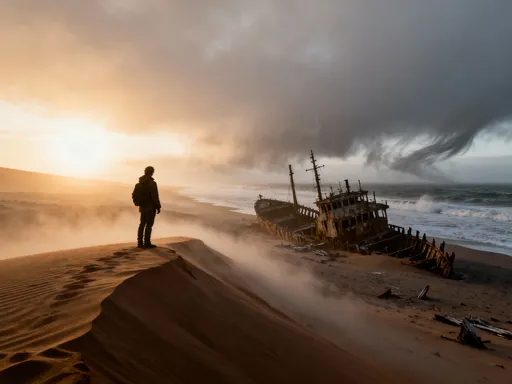
Among the most iconic spots are Conception Bay and Cape Fria, both offering dramatic views of rusting shipwrecks half-buried in sand. These skeletal remains of 20th-century vessels stand as silent monuments to the dangers of this coast. Some are so weathered they appear to grow from the dunes themselves, their iron frames twisted by time and salt. The silence here is profound. There are no crowds, no signs of modern development—just wind, waves, and the occasional cry of a seabird. For many visitors, this sense of isolation is the greatest draw. It’s a rare opportunity to experience a landscape that feels untouched by time, where nature remains in full command.
The emotional impact of arriving at the Skeleton Coast cannot be overstated. After hours of driving through barren terrain, the sudden appearance of the ocean feels almost miraculous. There’s a humility that comes with standing at the edge of such a vast and indifferent wilderness. You are reminded of your smallness, not in a frightening way, but in a way that brings clarity. The coast doesn’t care about your plans or expectations. It simply is. And in that stillness, many travelers find a deep sense of peace—one that stays long after they’ve left.
The Myth of Easy Access: Why Permits and Planning Matter
One of the biggest misconceptions about the Skeleton Coast is that it’s a destination you can simply drive to on a whim. The truth is far more complicated. Most of the coastal region falls within the boundaries of the Skeleton Coast National Park, a protected area managed by Namibia’s Ministry of Environment, Forestry and Tourism. Entry is not guaranteed and requires advance coordination. Travelers must obtain special permits, particularly for the northern sections of the park, which are more remote and ecologically sensitive. These permits are not always easy to secure, especially during peak seasons, and they often require proof of vehicle capability, travel itinerary, and emergency supplies.
Even with a permit, the journey is far from straightforward. The roads—such as the infamous C34 and C39—are not paved. In fact, many are little more than tire tracks across sand and gravel. Rain, even in small amounts, can turn sections into impassable mud. Sand dunes shift with the wind, erasing routes overnight. Signage is minimal to nonexistent, and GPS signals can be unreliable in such remote terrain. Without proper preparation, it’s easy to become disoriented or stuck. Stories of tourists stranded for days are not uncommon, especially among those who underestimate the challenges of self-driving in this environment.
A high-clearance 4x4 vehicle is not just recommended—it’s essential. Even with the right vehicle, travelers must carry extra fuel, spare tires, recovery equipment, and enough food and water to last several days beyond the planned trip. There are no gas stations, grocery stores, or roadside assistance for hundreds of kilometers. Mobile phone coverage is nonexistent across most of the coast, making communication a serious concern. The only reliable way to stay connected is through a satellite phone or a personal locator beacon (PLB), both of which should be considered non-negotiable safety tools.
For these reasons, many experienced travelers choose to go with authorized tour operators rather than attempt the journey independently. These companies have local knowledge, established routes, and relationships with park authorities. They also provide trained guides who understand the terrain, weather patterns, and wildlife behavior. While hiring a guide increases the cost of the trip, it significantly reduces risk and enhances the overall experience. Coordination with government offices in Windhoek or nearby towns like Khorixas or Swakopmund should begin weeks in advance. Last-minute planning rarely works here. The Skeleton Coast rewards those who prepare thoroughly and respect its boundaries.
Weather Warnings: Fog, Wind, and Sudden Changes
If you expect sunshine and clear skies, the Skeleton Coast will surprise you—often in inconvenient ways. The dominant feature of the coastal climate is the dense fog generated by the Benguela Current. This fog isn’t occasional; it’s a near-daily occurrence, especially in the mornings and at night. It can roll in with little warning, reducing visibility to near zero and making driving extremely hazardous. What might start as a light mist can quickly become a wall of white, obscuring dunes, cliffs, and even the shoreline itself. Navigating through such conditions without a reliable GPS and a clear mental map is not just difficult—it can be dangerous.
Strong winds are another constant presence. They howl across the open desert, carrying fine sand that stings exposed skin and infiltrates cameras, backpacks, and clothing. These winds can last for hours or even days, making outdoor activities uncomfortable and sometimes impossible. They also contribute to rapidly changing weather patterns. A calm morning can give way to a sandstorm by midday. Temperatures, while not extreme, can fluctuate significantly between day and night. Layers are essential—light clothing for the sun, but also windproof jackets, scarves, and goggles to protect against the elements.
These conditions have a direct impact on the visitor experience. Photography, one of the main reasons people come here, becomes a challenge under flat, diffused light. The fog, while atmospheric, often eliminates contrast and color, making images appear dull. Driving near cliffs or steep dunes requires extra caution, as sudden gusts can destabilize vehicles or obscure drop-offs. Even walking near the shore demands attention, as tides and waves can be unpredictable, especially in foggy conditions.
The key to dealing with this unpredictable climate is timing and flexibility. Early mornings, just after sunrise, often offer the best chance of clearer skies before the fog sets in. Midday can bring temporary breaks in the clouds, especially in the southern sections of the coast. Travelers should monitor weather forecasts closely—even if local forecasts are limited—and be prepared to adjust their plans. Packing the right gear makes a significant difference: waterproof bags for electronics, sand-resistant tents, and clothing that can handle moisture and wind. Above all, patience is required. The Skeleton Coast reveals itself slowly, on its own terms. Those who rush or expect perfection often leave disappointed. But those who wait, adapt, and embrace the uncertainty are often rewarded with moments of breathtaking clarity.
Wildlife Encounters: Beyond the Scenery
At first glance, the Skeleton Coast may appear lifeless—a barren landscape shaped by wind and sea. But look closer, and you’ll find signs of a surprisingly resilient ecosystem. This is not a place of lush forests or teeming herds, but of subtle adaptations and quiet survival. Among the most remarkable inhabitants are the desert-adapted elephants, which roam the inland riverbeds in search of water. These elephants travel great distances, their footprints etched into the sand, and sightings—though rare—are deeply moving. They are not part of the coastal dunes, but their presence in the broader region adds to the sense of wilderness.
Along the shore, the most visible wildlife is the Cape fur seal. Large colonies thrive at locations like Cape Cross, just south of the national park boundary. These bustling colonies are a cacophony of barks, splashes, and movement, with thousands of seals basking on rocky outcrops. While not within the strictest zones of the Skeleton Coast, Cape Cross is often included in itineraries and offers a striking contrast to the silence of the northern dunes. However, visitors must exercise caution and respect. Seals are wild animals, and getting too close can provoke aggression, especially during breeding season. Staying on designated paths and keeping a safe distance is essential for both human safety and animal well-being.
Scavengers also play a role in this ecosystem. Brown hyenas, adapted to the coastal environment, are often seen near shipwrecks and seal colonies, feeding on carcasses and scraps. Their presence is a reminder of the cycle of life and death that plays out in this harsh landscape. Birdwatchers will appreciate the variety of coastal species, including cormorants, pelicans, and oystercatchers, which patrol the shoreline in search of food. Kelp gulls wheel overhead, their calls echoing across the dunes. These birds rely on the rich marine life supported by the Benguela Current, making the coast a vital link in the regional food web.
While wildlife is not the primary draw for most visitors, it adds depth and meaning to the experience. Observing animals in such an extreme environment fosters a deeper appreciation for nature’s resilience. It also underscores the importance of responsible behavior. Feeding animals, making loud noises, or straying from marked paths can disrupt natural behaviors and damage fragile habitats. The best approach is quiet observation—using binoculars, keeping a respectful distance, and leaving no trace. When done right, wildlife encounters become moments of connection, not intrusion.
Photography Pitfalls: Chasing Light in the Wrong Conditions
Many travelers arrive at the Skeleton Coast with visions of dramatic photographs: golden dunes, stormy seas, and rusted shipwrecks silhouetted against a fiery sunset. The reality, however, is often different. The very conditions that make the coast unique—fog, wind, and diffused light—also make it one of the most challenging places to photograph. I learned this the hard way. On my first morning, I set up my tripod at a famous wreck, only to find that the thick fog erased all contrast and color. My images came out flat, lifeless, and frustratingly dull. I had brought expensive lenses and filters, but I hadn’t prepared for the environmental challenges.
Salt spray and blowing sand are constant threats to camera equipment. Without proper protection, lenses can become scratched, sensors dusted, and electronics damaged. I watched a fellow photographer lose a camera body after sand infiltrated the battery compartment. Now, I always use sealed plastic bags, lens hoods, and protective filters. Wiping down gear regularly and storing it in dry, padded cases is a must. Even small mistakes—like changing lenses in the open—can lead to costly damage.
The best opportunities for photography come during brief windows of clear weather. Golden hour—just after sunrise or before sunset—can deliver stunning results when the fog lifts and the sun breaks through. These moments are fleeting, so preparation is key. Scouting locations in advance, even in poor light, helps identify strong compositions. Using a polarizing filter can enhance contrast in overcast conditions, while a neutral density filter allows for long exposures of waves and mist. Black-and-white photography often works particularly well here, emphasizing texture, shadow, and form over color.
Composition also matters. The juxtaposition of natural and man-made elements—dunes against shipwrecks, seals against rusted metal—tells a powerful story. Wide-angle lenses capture the vastness of the landscape, while telephoto lenses isolate details like weathered wood or animal tracks. The key is patience. Waiting for the right light, the right moment, the right silence—these are what separate good photos from great ones. And when it all comes together, the result is unforgettable: an image that captures not just a place, but a feeling.
Responsible Travel: Preserving a Fragile Landscape
The Skeleton Coast is not just beautiful—it is fragile. The desert ecosystem here is slow to recover from disturbance. A single vehicle track can remain visible for decades, as there is little rain or vegetation to erase it. Lichens grow at a rate of less than a millimeter per year. Once damaged, they may not return in our lifetime. This fragility demands a high level of responsibility from every visitor. The principles of Leave No Trace are not optional here; they are essential.
Travelers must pack out everything they bring in—food wrappers, batteries, even biodegradable waste. There are no trash bins, no waste management systems. Burning trash is harmful and often ineffective in the damp, salty air. Noise should be kept to a minimum; loud sounds travel far in the open landscape and can disturb wildlife. Campfires are generally prohibited, both for safety and environmental reasons. Using portable stoves is the recommended alternative.
Staying on established routes is another critical practice. Venturing off-road, even to get a better view, can cause lasting damage. The desert crust, a thin layer of microorganisms that stabilizes the sand, is easily broken. Once disturbed, it can lead to erosion and dune destabilization. Park regulations exist for a reason, and following them is a sign of respect—for the land, for future visitors, and for the local communities who hold this place sacred.
The cultural significance of the Skeleton Coast should not be overlooked. For generations, indigenous groups have lived in harmony with this harsh environment, drawing sustenance and meaning from its rhythms. While much of the coast is uninhabited today, it remains part of a larger cultural landscape. Supporting eco-conscious guides, local conservation projects, and community-based tourism initiatives helps ensure that the benefits of visitation are shared fairly. It also promotes long-term protection of the area. Traveling responsibly isn’t just about minimizing harm—it’s about contributing positively to the places we love.
Putting It All Together: Planning Your Own Journey
Visiting the Skeleton Coast is not like checking off a typical tourist destination. It is a commitment—one that requires preparation, respect, and a willingness to embrace the unexpected. The rewards, however, are immense. There is a profound sense of solitude here, a chance to disconnect from the noise of modern life and reconnect with the raw power of nature. The images you capture, the silence you experience, the stories you carry home—they stay with you.
To plan such a journey wisely, start with a checklist. Confirm your permits well in advance. Ensure your vehicle is in excellent condition, equipped with dual spare tires, recovery gear, and extra fuel. Pack emergency supplies: water purification tablets, a first-aid kit, a satellite communication device, and enough food for at least three extra days. Monitor weather conditions and be ready to adjust your route. Travel with a companion if possible—safety in numbers matters in remote areas.
Consider combining the Skeleton Coast with other parts of northern Namibia. Damaraland, with its ancient rock engravings and desert-adapted rhinos, offers a complementary experience. Etosha National Park provides a chance to see big game in a more accessible setting. Together, these destinations create a rich, layered portrait of Namibia’s natural and cultural heritage.
The Skeleton Coast doesn’t give up its secrets easily. It demands effort, patience, and humility. But for those who approach it with care and curiosity, it offers something rare: a true wilderness experience in an age when such places are vanishing. The journey is not just about seeing stunning spots—it’s about understanding them, respecting them, and leaving them as you found them. In doing so, you become part of a legacy of stewardship, ensuring that future generations can also stand at the edge of the desert and sea, breathless with wonder.
The Skeleton Coast isn’t just another destination—it’s a confrontation with nature in its most untamed form. Its scenic wonders are real, but so are the challenges. With better preparation and deeper respect, travelers can avoid common pitfalls and truly connect with this extraordinary place. The journey demands more, but gives back infinitely more—if you let it.