You Won’t Believe These Hidden Photo Spots in Toledo
Toledo, Spain, feels like stepping into a living painting—centuries-old walls, golden light, and views that stop you mid-step. I went looking for quiet corners where history meets beauty, not just crowded landmarks. What I found were secret spots perfect for photos and peaceful moments. Whether you're chasing golden hour glow or authentic charm, Toledo delivers. Let me show you the places that made my camera—and heart—work overtime.
The Magic of Toledo: Why It’s a Photographer’s Dream
Toledo is more than a city; it is a layered canvas of history, faith, and artistry. Perched high above the sweeping curve of the Tagus River, this ancient capital draws photographers with its dramatic elevation, cobblestone lanes, and skyline punctuated by church spires and fortress walls. Its compact medieval core, designated a UNESCO World Heritage site in 1986, offers unmatched density of visual interest—every turn reveals a new perspective, a fresh composition. The city’s unique position on a rocky peninsula surrounded by the river creates natural vantage points, making it ideal for panoramic shots and atmospheric depth.
What truly sets Toledo apart is the quality of light. At sunrise, soft gold spills over the eastern hills, gently illuminating the stone façades and casting long shadows across the narrow streets. By late afternoon, the western exposure basks in warm, diffused glow, enhancing textures and bringing out the subtle hues in weathered walls. These lighting conditions are especially favorable for capturing the city’s essence without harsh contrasts. Photographers benefit from the interplay of shadow and illumination, which adds dimension and mood to both wide-angle cityscapes and intimate close-ups of architectural details.
The city’s cultural richness also enhances its visual appeal. Known as the 'City of Three Cultures,' Toledo was once home to thriving Christian, Muslim, and Jewish communities, each leaving behind distinctive architectural and artistic legacies. This coexistence is visible in the fusion of Gothic spires with Islamic tilework and Hebrew inscriptions on ancient synagogues. For photographers, this means a wealth of stylistic contrasts within a small area—Moorish arches beside Renaissance courtyards, ironwork grilles framing wooden doors, and mosaics embedded in centuries-old walls. The result is a destination where every photograph tells a story of resilience, craftsmanship, and shared heritage.
Moreover, Toledo’s pedestrian-friendly layout allows for unhurried exploration. Unlike sprawling urban centers, the historic center can be traversed on foot in under an hour, yet it holds countless micro-moments waiting to be captured. This accessibility makes it ideal for travelers who want to travel at a thoughtful pace, observing details others might miss. Whether you’re using a professional DSLR or a smartphone, the city rewards patience and attention. Its visual rhythm—alternating between open plazas and intimate alleyways—creates a natural flow for storytelling through images.
Alcázar Gardens: An Overlooked Vantage Point
Rising prominently at the highest point of Toledo, the Alcázar stands as a powerful symbol of the city’s military and political past. While many visitors admire it from afar or glimpse it through the railings, few realize that parts of its surrounding gardens are open to the public and offer some of the most rewarding photo opportunities in the city. Nestled behind the fortress-like structure, these manicured green spaces provide a serene contrast to the rugged stone above. From here, the full arc of the Tagus River unfolds below, framed by olive groves and rolling hills, with the city’s skyline rising dramatically in the background.
What makes this location special is its relative solitude. While the main square and cathedral draw crowds, the northern terraces of the Alcázar gardens remain quiet, especially in the early morning hours before the military academy fully activates the grounds. This timing allows photographers to set up tripods, adjust compositions, and capture the city waking up in soft, even light. The elevated position ensures a commanding view, perfect for wide-angle shots that emphasize depth and scale. Using a moderate telephoto lens can isolate specific landmarks—like the San Martín Bridge or the Monastery of San Juan de los Reyes—adding narrative focus to your portfolio.
For best results, visit just after sunrise when the air is still and the golden light bathes the city in warmth. The low sun enhances texture in the stonework and reduces harsh contrasts, making exposure easier to manage. A polarizing filter can help deepen the blue of the sky and reduce glare on the river’s surface. For those interested in black-and-white photography, the interplay of light and shadow on the fortress walls offers strong graphic potential. The symmetry of the garden pathways also lends itself well to leading lines, guiding the viewer’s eye toward the horizon.
It’s important to respect the site’s active military presence. While public access is permitted during daylight hours, certain areas remain restricted. Staying on marked paths and avoiding drone use without authorization ensures a respectful and trouble-free visit. Even without advanced equipment, the location rewards observation—watching how light shifts across the river, how birds glide over the treetops, or how distant church bells echo across the valley. These quiet moments often inspire the most meaningful images.
San Miguel de Silo: A Quiet Courtyard with Character
Off the beaten path, tucked into a quiet residential lane near the city’s eastern edge, lies the small Romanesque church of San Miguel de Silo. Built in the 12th century, this modest place of worship is easy to miss—but those who find it are rewarded with one of Toledo’s most photogenic hidden gems. The church’s symmetrical façade, framed by a rounded arch and crowned with a simple cross, exudes quiet dignity. Weathered stone, softened by centuries of wind and rain, bears the marks of time in a way that feels deeply authentic. Surrounding it are whitewashed houses with iron balconies and potted geraniums, creating a picturesque streetscape that feels untouched by mass tourism.
This spot is ideal for architectural photography, particularly for those interested in symmetry, texture, and natural framing. The contrast between the dark stone of the church and the bright walls of the adjacent buildings creates visual balance, while the narrow street funnels light in a way that naturally highlights the façade. Early afternoon, when the sun is high, can create strong shadows that emphasize depth, while late morning offers softer, more even illumination. A wide-angle lens captures the full context of the courtyard, while a mid-range focal length isolates details like carved capitals or the ironwork of nearby gates.
Beyond its visual appeal, San Miguel de Silo offers a sense of peace often missing in more crowded parts of the city. Benches nearby invite visitors to sit, observe, and absorb the atmosphere. A small café just around the corner serves coffee and pastries, making it an excellent spot for a quiet break. This combination of beauty and tranquility makes the area perfect for candid street photography—locals passing by, cats lounging in sunlit corners, or laundry hanging between buildings. These everyday moments add humanity and warmth to a photographic journey.
Because the church is still in use, visitors should maintain a respectful demeanor. Avoid blocking entrances, keep voices low, and refrain from using flash if photographing the interior. The surrounding neighborhood is residential, so it’s important to be mindful of privacy. But when approached with sensitivity, this area offers a rare glimpse into daily life in historic Toledo—a place where the past and present coexist in quiet harmony.
Mirador del Valle: The Classic Shot, Done Right
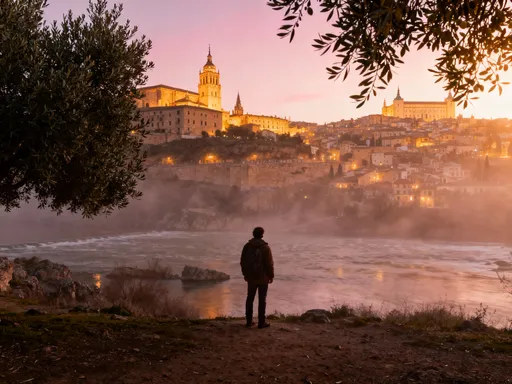
No discussion of Toledo’s best photo locations would be complete without mentioning the Mirador del Valle, the most iconic viewpoint in the region. Located about a mile south of the city across the river, this sweeping overlook offers a postcard-perfect panorama of Toledo’s skyline—its cathedral, castles, and red-tiled roofs rising from the rocky hill like a scene from a medieval epic. Posters, travel guides, and documentaries have immortalized this view, and for good reason: it captures the city’s grandeur in a single frame.
Yet the popularity of the Mirador del Valle comes with challenges. Midday visits often mean crowds, parked cars, and difficulty finding a clear line of sight. The key to mastering this location is timing. Arriving an hour before sunset allows you to secure a prime spot, set up your gear, and watch the light transform. As the sun dips below the horizon, the city glows in warm amber, and the shadows deepen, adding drama and dimension. Long exposure shots during twilight can capture the gradual shift from day to night, with streetlights flickering on like stars below.
For those with drones, this area offers legal flying zones—provided local regulations are followed. Always check current drone policies, avoid restricted airspace near the city center, and never fly over crowds or private property. When used responsibly, drones can capture breathtaking aerial perspectives, showing how the city clings to the hillside and how the river wraps around it like a protective moat.
Another way to add originality to this classic shot is through creative composition. Instead of centering the city, try framing it between the gnarled branches of an olive tree in the foreground. Include the movement of a train passing on the rails below for a sense of scale and motion. On foggy mornings, the city emerges from the mist like a mirage, offering moody, ethereal images that feel almost dreamlike. A tripod is essential for stability, especially in low light, and a remote shutter release helps avoid camera shake. Whether you’re a seasoned photographer or an enthusiastic amateur, the Mirador del Valle rewards patience and preparation with unforgettable results.
Jewish Quarter Alleys: Where Light Plays Tricks
Wandering through Toledo’s Jewish Quarter is like stepping into a labyrinth of light and shadow. Narrow lanes such as Calle del Tránsito and Calle Samuel Levi wind tightly between tall whitewashed buildings, their paths paved with worn stone that glistens after rain. Sunlight filters down in slanted beams, illuminating doorways, iron grilles, and wooden shutters in fleeting spotlights. These natural effects create dynamic, ever-changing compositions—perfect for photographers who appreciate atmosphere and spontaneity.
The interplay of light and architecture is especially striking in the late morning and early afternoon, when the sun is high enough to pierce through the narrow corridors but low enough to cast long shadows. Wide-angle lenses capture the full depth of these alleys, emphasizing perspective and scale. Slower shutter speeds can enhance the mood, allowing for subtle motion blur if a figure passes through the frame, adding narrative tension. Black-and-white photography works exceptionally well here, turning contrasts into bold graphic statements.
Along these streets stand some of Toledo’s most significant historical sites, including the Sinagoga del Tránsito, now a museum dedicated to Sephardic culture. While photography inside religious sites may be restricted, the exteriors and surrounding areas offer abundant opportunities. Look for details: a hand-forged door knocker, a fragment of Hebrew inscription, a vine climbing a courtyard wall. These small elements tell powerful stories of a community that once flourished here.
Respect is essential when photographing in residential areas. Many homes along these lanes are still occupied, and some families have lived here for generations. Avoid pointing cameras directly into windows or private courtyards. Smile, nod, and if someone gestures discomfort, lower your camera. In many cases, locals are happy to engage—some may even share stories or recommend hidden courtyards. This human connection often leads to the most authentic and memorable images, far beyond what any lens can capture alone.
Parador de Toledo: Luxury with a View
Nestled within the former Monastery of San Juan de los Reyes, the Parador de Toledo is more than a hotel—it’s a destination in itself. This upscale accommodation, part of Spain’s state-run network of historic hotels, welcomes non-guests during the day, making it accessible to photographers and cultural visitors alike. The building’s transformation from 15th-century monastery to luxury hotel has preserved its architectural soul: cloister arches, vaulted ceilings, and serene interior courtyards remain intact, now complemented by elegant furnishings and modern amenities.
The central cloister is a standout feature. Surrounded by two levels of graceful arches, it offers a symmetrical composition that invites careful framing. Morning light filters through the upper arcade, casting delicate patterns on the stone floor. The quiet atmosphere makes it ideal for contemplative shots—perhaps a single chair placed by a column, or a beam of light cutting through the dimness. Because the space is well maintained but not overly staged, it retains a sense of authenticity that resonates with viewers.
The hotel’s terrace café provides one of the best elevated views of the Tagus Valley without leaving the city center. From here, you can photograph the river winding into the distance, framed by olive trees and distant hills. The contrast between the historic architecture and the natural landscape creates a balanced, harmonious image. While enjoying a coffee or pastry, photographers can observe how light changes across the valley throughout the morning and early afternoon.
Interior shots benefit from a respectful approach. Use natural light whenever possible, and avoid using flash, which can disturb other guests and damage delicate surfaces. A fast prime lens performs well in lower-light areas like stairwells and corridors. The Parador’s design philosophy—honoring the past while embracing comfort—makes it a compelling subject for lifestyle and architectural photography. Every detail, from the iron chandeliers to the hand-painted tiles, reflects a commitment to preserving Spain’s cultural legacy.
River Tagus Walk: Nature Meets Heritage
For a different perspective on Toledo, descend from the hilltop city and follow the path along the River Tagus. This scenic walk offers a peaceful escape from the stone corridors above, replacing echoes of footsteps with the gentle sound of flowing water and rustling reeds. The route, accessible from several points including the Alcántara Bridge, winds along the riverbank, passing rocky outcrops, shaded groves, and natural viewpoints. It’s a favorite among locals for morning strolls and evening walks, especially in spring and autumn when temperatures are mild.
From down here, Toledo appears in profile—its skyline rising dramatically against the sky, reflected in the slow-moving river. The Alcántara Bridge, a Roman-era structure with medieval reinforcements, provides a powerful foreground element for wide-angle shots. Its stone arches frame the city beautifully, especially at golden hour when the warm light enhances the texture of the masonry. Including a person walking across the bridge can add scale and narrative, suggesting journey and discovery.
In spring, wildflowers bloom along the banks—poppies, lavender, and yellow broom—adding splashes of color to the green and stone palette. These natural details contrast with the city’s historic weight, reminding visitors that Toledo is not frozen in time but alive, surrounded by nature’s cycles. Birds such as kingfishers and herons can sometimes be spotted near the water, offering opportunities for wildlife photography.
Comfortable walking shoes are essential, as the path includes uneven terrain and occasional steps. Carrying water is advisable, especially in summer when temperatures rise and shade is limited. While the route is safe and well-marked, it’s best to stay on designated paths to protect the natural environment. This walk is not just a photo opportunity but a sensory experience—feeling the breeze, hearing the river, and seeing the city from a fresh angle. It reminds us that beauty exists not only in monuments but in the quiet spaces between them.
Capturing More Than Just Images
Toledo’s true magic lies not in its famous landmarks alone, but in the quiet corners where history breathes softly and light falls in unexpected ways. The most powerful photographs are often those taken when we pause, look closely, and allow the city to reveal itself. Whether it’s the texture of ancient stone, the reflection of a bell tower in a puddle, or a fleeting moment of daily life in a hidden courtyard, these images carry more than visual appeal—they carry feeling.
Photography in Toledo becomes more meaningful when combined with cultural appreciation. Each street, each doorway, each patch of sunlight tells a story of coexistence, resilience, and artistic mastery. The city has endured centuries of change, yet it remains whole, its spirit intact. By traveling with curiosity and respect, visitors honor this legacy. Avoiding intrusive behavior, supporting local businesses, and learning a few words of Spanish can deepen the experience and lead to more authentic connections.
Let your camera be an extension of your attention, not a barrier. Take time to sit, observe, and listen. Some of the best moments happen when the lens is down—when you’re simply present. And when you do raise your camera, do so with intention. Frame not just what you see, but what you feel. Because in the end, the photographs we cherish most are not the technically perfect ones, but the ones that carry memory, emotion, and truth.
Toledo invites us to slow down, to look deeper, and to find beauty in the overlooked. Whether you’re holding a professional camera or a smartphone, let this city inspire you to see the world with fresh eyes. Visit with respect, photograph with care, and carry home not just images, but a deeper connection to one of Spain’s most soulful destinations.