You Won’t Believe What I Found in Bali’s Hidden Art Villages
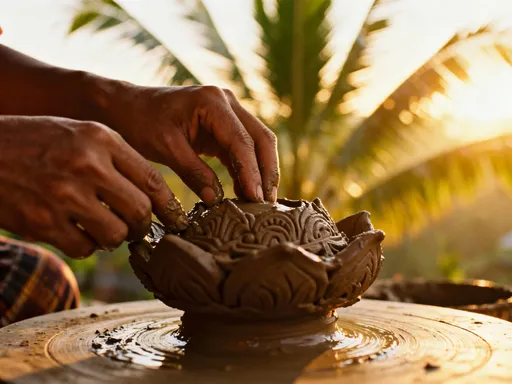
When I first stepped into Bali, I thought I knew what to expect—temples, rice terraces, and tourist crowds. But the island’s soul? That hit me in a quiet village where paint-stained hands shaped stories from clay and cloth. This isn’t just a vacation—it’s a deep dive into living art and culture. From drumbeats at dawn to sacred dance under torchlight, Bali doesn’t perform traditions. It lives them. And honestly? You’ve never seen creativity like this.
The Living Canvas: Experiencing Bali’s Art Beyond Galleries
In most places, art lives behind glass, labeled and lit, admired from a distance. In Bali, art is not something you merely observe—it breathes, moves, and pulses through daily life. It is in the morning scent of frangipani and clove as women place woven palm-leaf offerings, or canang sari, at temple gates, doorsteps, and even motorbikes. Each offering is a miniature work of devotion, colored with turmeric, rice, and flowers arranged in symbolic harmony. This is not decoration; it is ritual, and it is art.
Every Balinese Hindu participates in this artistic rhythm, whether by weaving, dancing, carving, or preparing ceremonial textiles. From the ornate wooden gates of village temples to the hand-painted kecak masks hanging in roadside stalls, creativity is inseparable from spiritual practice. A mother braids her daughter’s hair before a temple ceremony with the same care a sculptor chisels a deity’s face. The distinction between artist and community dissolves. You don’t need a museum to witness art here—you walk through it.
The sensory immersion is immediate. The air hums with gamelan music drifting from a nearby compound, where young boys rehearse for an upcoming temple festival. The streets glow with the reds, golds, and deep indigos of hand-dyed endek fabric. Even the food—arranged on banana leaves with geometric precision—feels like a form of expression. To travel through Bali is to move through a living canvas, where every gesture, color, and sound contributes to a collective masterpiece shaped by centuries of tradition.
Ubud: Heartbeat of Balinese Culture (And Where to Start)
If Bali has a cultural heart, it beats strongest in Ubud. Nestled in the lush hills of central Bali, this town is more than a yoga retreat hub or Instagram backdrop—it is a living archive of Balinese heritage. Here, tradition and modernity coexist without conflict. You’ll find ancestral family compounds standing beside boutique cafes, and gamelan rehearsals echoing near artisan co-working spaces. Ubud offers the perfect entry point for travelers seeking depth, but navigating it with intention is key.
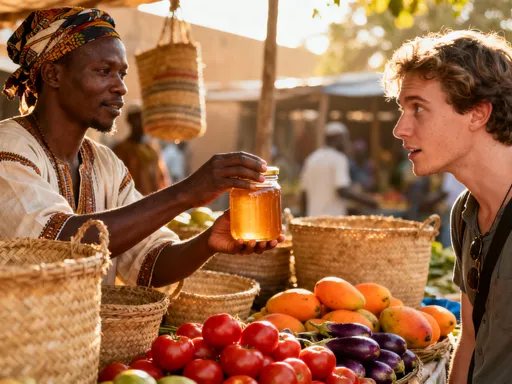
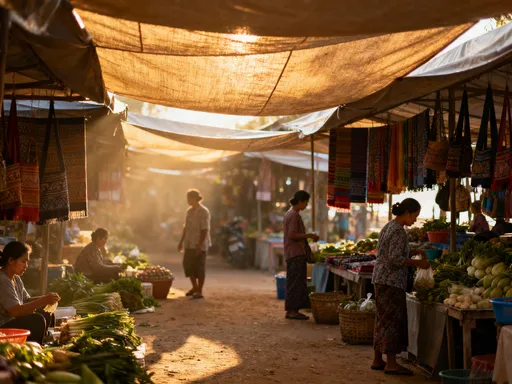
The best way to begin is at sunrise. Visit the Ubud Art Market before the crowds arrive. By 7 a.m., local artisans have already laid out hand-carved masks, batik textiles, and silver jewelry. The colors are vibrant—deep sapphire blues, earthy ochres, and emerald greens—all derived from natural dyes. Instead of haggling aggressively, take time to speak with the vendors. Many are artists themselves, and a simple “Where did you learn this?” can open a conversation that lasts longer than the transaction.
A short walk from the market, open-air studios line Monkey Forest Road. Artists sit under thatched roofs, brushes in hand, often painting the same scenes—temple festivals, rice harvests, mythological battles—that their grandparents painted. Some welcome quiet observers; others invite you to sit and listen as they explain the symbolism behind a Barong mask or a Legong dancer’s gesture. This is not performance for profit; it is practice, preservation, and pride.
For a rare glimpse into spiritual life, a respectful invitation to a mepandes—a tooth-filing ceremony—can be transformative. This rite of passage, meant to purify the soul by removing animalistic traits like greed and anger, is deeply personal. If invited, dress modestly in traditional kebaya or sarong, bring a small offering, and follow the lead of the family. Do not photograph unless explicitly permitted. Such moments are not spectacles—they are sacred, and honoring that boundary is the foundation of meaningful travel.
Beyond Ubud: The Underrated Craft Villages You Need to See
While Ubud draws the spotlight, Bali’s true artistic soul lies in its quieter corners—villages where craft is not a tourist product but a way of life. These communities, passed down through generations, offer a more intimate and authentic experience than any curated cultural show. Three stand out: Mas for wood carving, Batubulan for stone sculpture, and Celuk for silverwork. Each village pulses with its own rhythm, shaped by the tools, materials, and myths unique to its craft.
Begin with Mas, a small village nestled in the Petanu River valley. Here, artisans transform teak and jackfruit wood into intricate deities, mythological creatures, and ceremonial panels. Many workshops are family-run, with grandfathers teaching grandsons the precise angle of a chisel stroke. Visit in the late morning, when the light filters through the trees and the sound of mallets tapping stone and wood fills the air. You’re welcome to watch, but always ask first. Some carvers work in silence, deep in concentration, and a quiet presence is more appreciated than constant questions.
Next, head to Batubulan, famous for its stone carvings that adorn temples and homes across the island. The village is especially known for its depictions of Barong, the lion-like creature representing good, locked in eternal battle with Rangda, the witch of evil. These sculptures are not merely decorative—they are believed to carry protective energy. Workshops here are often open-air, with dust-covered artisans shaping volcanic rock with hammers and chisels. The process is slow, deliberate, and physically demanding. Watching a single block of stone emerge as a snarling Barong face is a lesson in patience and devotion.
Finally, Celuk, a village nearly synonymous with Balinese silver. Rows of family workshops line the main road, each specializing in different techniques—filigree, repoussé, or granulation. Unlike mass-produced jewelry sold in tourist zones, pieces here are hand-forged, often taking days to complete. Many artisans offer short demonstrations, showing how molten silver is poured, cooled, and shaped. Some even allow visitors to try simple stamping or polishing under guidance. Purchasing a piece directly supports the craft and ensures your keepsake carries real meaning.
Reaching these villages is simple—local drivers or scooters can take you in under an hour from Ubud. The best time to visit is between 9 a.m. and 3 p.m., when artisans are most active. Always approach with respect: remove your shoes if entering a home studio, speak softly, and never interrupt a ritual or prayer. These are not attractions—they are workplaces, spiritual spaces, and homes.
Dance, Drum, Devotion: The Spiritual Rhythm of Balinese Performance
Balinese dance is not entertainment. It is prayer in motion. Whether it’s the delicate finger movements of the Legong or the thunderous drumming of the kecak fire dance, every performance is rooted in Hindu mythology and religious devotion. These dances are offerings—to the gods, to ancestors, to the balance of the universe. They are performed during temple anniversaries, harvest festivals, and rites of passage, not for applause, but for spiritual alignment.
The Legong dance, often performed by young girls, tells stories from ancient epics like the Ramayana. Dancers wear gold-threaded costumes and ornate headdresses, their eyes flickering rapidly to convey emotion. Their hands move like fluttering birds, each gesture codified and symbolic. A raised palm means greeting; a curled finger points to the divine. To watch a Legong performance in a village pura (temple) at dusk, with oil lamps flickering and incense curling into the night, is to witness beauty as worship.
Equally powerful is the Barong dance, a dramatic portrayal of the eternal struggle between good and evil. The Barong, a shaggy lion-like creature, dances with protective energy, while Rangda, the widow-witch, casts spells and summons chaos. The climax—a trance-induced ritual where men stab themselves with daggers, unharmed—is not a trick, but a sacred act believed to be protected by divine force. Foreigners may find it unsettling, but it is not for shock value. It is a profound expression of faith.
Attending such a performance requires mindfulness. Always check in advance—many are held only on specific temple anniversaries, known as odalan. Dress respectfully in a sarong and sash, even if not required. Sit quietly, avoid using flash photography, and never walk in front of performers or sacred spaces. These dances are not shows. They are ceremonies. Your presence should be one of reverence, not intrusion.
Hands-On Immersion: Taking a Traditional Art Class
There is a difference between seeing art and making it. In Bali, the opportunity to try traditional crafts is not just a tourist activity—it’s a bridge to understanding. Whether you’re struggling to control a wax pen in batik or learning the first notes of a gamelan melody, the act of creating—even imperfectly—connects you to the culture in a way that observation never can.
One of the most rewarding experiences is a batik workshop. Originating in Java but widely practiced in Bali, batik involves drawing designs with hot wax on cotton, then dyeing the fabric. The wax resists the dye, preserving the original pattern. It sounds simple, but the first time you try to draw a straight line with a canting (wax pen), your hand trembles. The wax blobs. The design warps. Yet, your instructor—a third-generation batik artist—smiles gently and shows you again. By the end, your cloth may not be perfect, but it is yours. And in that imperfection, you feel the humility of learning, the patience of mastery, and the pride of creation.
Silver-making classes in Celuk offer a similar journey. You begin with a small lump of silver, heated and hammered flat. Then, using tiny chisels, you engrave a simple motif—perhaps a lotus or a Barong eye. The physicality is surprising. Your arms tire. Your focus narrows. But when you hold the finished piece, cooled and polished, you understand why artisans spend decades refining their skill. This is not fast art. It is slow, deliberate, and deeply personal.
Gamelan lessons, usually held in village cultural centers, are another form of immersion. The gamelan orchestra—made of bronze gongs, metallophones, and drums—produces a shimmering, interlocking sound that feels both ancient and alive. As a beginner, you’ll likely start with a simple rhythmic pattern on a kendang (drum) or a single note on a gangsa (metallophone). At first, it’s hard to keep time. But as the group finds its rhythm, something shifts. You’re no longer playing alone—you’re part of a harmony that has echoed through Bali for centuries.
These classes do more than teach technique. They support local artists, preserve endangered crafts, and create genuine human connection. Fees go directly to instructors, many of whom struggle to pass their skills to younger generations distracted by modern life. By participating, you become part of the effort to keep tradition alive.
Navigating Culture Shock with Respect: Dos and Don’ts for Travelers
Traveling deeply in Bali means confronting cultural differences with humility. What may seem strange or inconvenient—a closed temple, a sudden procession, a request to cover your shoulders—is often rooted in centuries of spiritual practice. Respecting these customs is not just polite; it is essential to ethical tourism.
One of the most common mistakes is stepping on or over canang sari offerings. Placed daily, these small baskets are sacred. Never kick them aside, even if they’re in your path. If one is in the way, gently step around it. Similarly, avoid touching ceremonial objects—masks, textiles, or offerings—unless invited. These items are consecrated and not souvenirs.
Photography is another sensitive area. While many Balinese are happy to be photographed, always ask permission before taking pictures of people, especially during rituals. Never use flash during ceremonies—it is considered disruptive and disrespectful. If someone declines, accept it gracefully. Your memory of the moment is more valuable than any photo.
Dress codes matter, especially in temples. Shoulders and knees must be covered. Most temples provide sarongs and sashes for rent, but bringing your own is more respectful. Women who are menstruating are traditionally not allowed in temples—this is not discrimination, but a cultural belief about ritual purity. If you’re unsure, follow the lead of local women.
Finally, remember that Bali is not a theme park. It is a living, breathing society with its own rhythms, challenges, and values. Avoid treating ceremonies as performances. Do not mimic sacred dances or wear ritual costumes as fashion. These acts reduce sacred traditions to costumes and degrade their meaning. Instead, observe quietly, listen deeply, and let the culture speak to you on its own terms.
Why This Kind of Travel Changes You—And How to Keep It Going
Traveling through Bali’s hidden art villages does more than fill a passport with stamps. It reshapes the way you see the world. You begin to notice art in everyday acts—how a street vendor folds a banana leaf, how a grandmother braids her hair, how silence holds space for prayer. You understand that creativity is not just for galleries or artists—it is a shared human language, woven into the fabric of life.
This kind of travel is slow. It requires patience, presence, and a willingness to listen. It is not about checking off landmarks, but about forming connections—between people, traditions, and the sacred. In a world of fast tourism and curated experiences, Bali reminds us that depth is possible. That beauty can be devotional. That culture is not a product, but a practice.
And the journey doesn’t end when you leave the island. You can carry it home. Support Indonesian artisans by purchasing directly from ethical online cooperatives. Share what you’ve learned—not just photos, but stories of the carver in Mas, the dancer in Ubud, the batik teacher who smiled when your wax line wobbled. Practice mindful travel elsewhere, approaching each new culture with the same humility and curiosity.
Or simply, let Bali’s rhythm linger. Light a candle in the morning. Arrange flowers on your table. Pause before speaking, as if choosing words with the care of a sculptor shaping stone. These small acts honor the spirit of what you witnessed—not as imitation, but as integration.
Bali’s hidden art villages are not just destinations. They are invitations—to see with new eyes, to create with open hands, to live with intention. The island doesn’t just show you art. It teaches you how to live as one. And that, perhaps, is the most unforgettable masterpiece of all.