You Won’t Believe These Cape Town Views – Culture from Above
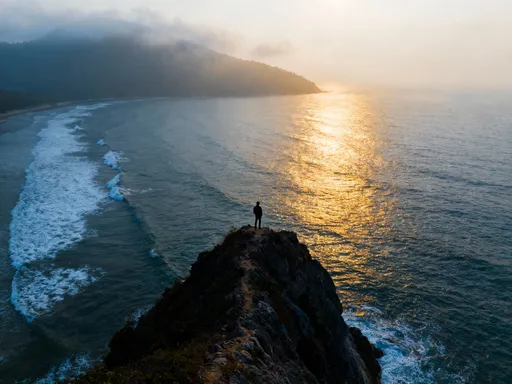
Cape Town isn’t just about mountains and ocean—it’s a living canvas of culture, history, and soul. From the moment I stood atop Signal Hill at sunset, watching kites dance above the city while local beats pulsed from nearby homes, I knew this wasn’t just sightseeing. These viewpoints aren’t just scenic—they tell stories. They connect you to communities, traditions, and moments that define South Africa. Let me take you to the spots where landscape meets legacy. Here, elevation is more than altitude; it’s insight. It’s memory. It’s the quiet hum of a city shaped by centuries of movement, resistance, faith, and resilience. To see Cape Town from above is to witness not only its breathtaking geography but also the enduring spirit of its people.
The Spirit of the City: Why Viewpoints Reveal More Than Scenery
Cape Town’s skyline is framed by dramatic peaks and sweeping coastlines, but its true essence lies in how these landscapes have shaped human life across generations. When travelers climb to high vantage points, they do more than admire panoramic vistas—they gain access to a deeper understanding of the city’s layered identity. The mountains surrounding the city bowl are not merely geological formations; they are silent witnesses to centuries of migration, settlement, conflict, and survival. From the earliest Khoi herders who navigated by natural landmarks to colonial forces that used elevated ground for surveillance and control, height has always carried significance in this region. Today, standing above the city offers a unique opportunity to reflect on how geography has influenced social patterns, economic divides, and cultural expression.
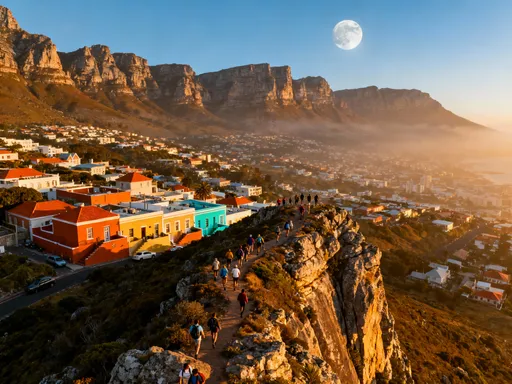
What makes these viewpoints especially powerful is their ability to compress time. From above, one can see the orderly grid of the central business district juxtaposed with the organic sprawl of townships like Khayelitsha, the colorful rows of Bo-Kaap nestled against the slopes of Signal Hill, and the coastal ribbon of the Southern Suburbs stretching toward the Atlantic. Each of these areas tells a story about land use, displacement, and community resilience. For instance, the forced removals under apartheid policy uprooted thousands from historically mixed neighborhoods, relocating them far from economic centers. Seeing these spatial realities from an elevated perspective fosters empathy and awareness, transforming passive tourism into meaningful observation.
Moreover, many of Cape Town’s high points are embedded with cultural rituals and communal practices. Whether it’s the full-moon hike up Lion’s Head or the quiet morning prayers offered from a hilltop in Constantia, elevation often serves as a bridge between the physical and the spiritual. Locals do not climb simply for exercise or views—they ascend to reconnect with tradition, celebrate identity, and honor ancestors. As a visitor, approaching these spaces with respect and curiosity allows for genuine connection. It invites dialogue, listening, and learning. In this way, the act of looking down becomes an act of looking inward—toward understanding, humility, and shared humanity.
Table Mountain: Iconic Peak, Living Heritage
No symbol captures Cape Town’s spirit quite like Table Mountain. Its flat-topped silhouette dominates the skyline, visible from nearly every corner of the city. Yet beyond its postcard-perfect profile lies a mountain rich with ecological diversity and cultural significance. For centuries, Table Mountain has been a source of water, medicine, inspiration, and refuge. The Khoisan people, original inhabitants of the region, revered the mountain as a sacred space, believing it to be home to ancestral spirits and natural guardians. Their oral traditions speak of rainmakers who climbed its slopes to communicate with the skies, and of medicinal plants found nowhere else on Earth. These stories remain alive today, preserved through community-led heritage programs and guided walks that center indigenous knowledge.
The mountain’s fynbos vegetation—a unique biome found almost exclusively in the Western Cape—is not only botanically remarkable but also deeply tied to traditional healing practices. Locals continue to use plants like buchu and rooibos for their anti-inflammatory and digestive properties, passing down knowledge through generations. Conservation efforts now work hand-in-hand with these traditions, ensuring that ecological protection does not erase cultural continuity. Organizations such as the Table Mountain National Park team collaborate with local healers and elders to map plant species and safeguard sacred sites from over-tourism and environmental degradation.
For visitors, ascending Table Mountain offers more than just a photo opportunity—it presents a chance to witness living heritage in action. While the cable car provides easy access to the summit, hiking routes like Platteklip Gorge offer a more immersive experience. This direct, steep path has been used for centuries and remains one of the most popular trails. Early morning hikes allow travelers to avoid crowds and experience the mountain’s quiet majesty. Mist rolling over the edge, the scent of damp fynbos, and the distant call of a rock hyrax create a sensory journey that connects body and place. Along the way, guides often share stories about the mountain’s role during colonial times, when signal fires were lit to warn ships in Table Bay, or how enslaved people once used hidden paths to escape bondage.
To engage respectfully, travelers should listen more than speak, support local guides rather than international tour operators, and follow all park regulations designed to protect both nature and culture. Avoid picking plants or disturbing rock formations, and remember that some areas may be off-limits due to spiritual significance. By approaching the mountain not as a conquest but as a teacher, visitors align themselves with a tradition of reverence that has endured for millennia.
Lion’s Head: Where Locals Gather, Dance, and Remember
If Table Mountain is Cape Town’s crown, then Lion’s Head is its heartbeat. Rising between Signal Hill and Table Mountain, this 669-meter peak is beloved for its accessibility, stunning 360-degree views, and vibrant social energy—especially during the full moon. Every month, hundreds of Capetonians gather at dusk to hike the trail barefoot, carrying drums, candles, and song into the night sky. This tradition, which gained momentum during the anti-apartheid era, blends spirituality, celebration, and quiet resistance. For many, the climb is a form of release—a way to honor lost loved ones, mark personal milestones, or simply breathe freely in a country still healing from its past.
The full-moon hike is not a commercialized event; it is a grassroots gathering rooted in inclusivity. People of all ages, races, and backgrounds come together, united by rhythm and shared ascent. As the trail winds upward through rocky crevices and fynbos-lined paths, drumbeats grow louder, voices rise in harmony, and laughter echoes against the cliffs. At the summit, the city glows below like a constellation, and the Atlantic Ocean shimmers under lunar light. It’s common for someone to lead a moment of silence, a prayer, or a spoken tribute—reminders that this space holds both joy and sorrow.
For visitors, joining this experience requires sensitivity and humility. There is no formal registration, no entry fee, and no expectation to participate beyond presence. Coming prepared matters: wear sturdy shoes (though many go barefoot), bring warm layers (the wind can be biting), carry a flashlight or headlamp, and pack out all trash. Most importantly, arrive with an open heart and a willingness to listen. While photographs are welcome, they should never disrupt the mood or intrude on private moments. This is not a performance; it is a practice.
Outside of full moons, Lion’s Head remains a favorite for sunrise hikes and yoga sessions at dawn. The trail is relatively short—about 1.5 hours round trip—but includes some exposed sections with chains for support, making it moderately challenging. Its proximity to neighborhoods like Gardens and Tamboerskloof makes it easily accessible by foot or public transport. Whether under starlight or morning light, the summit offers more than scenery; it offers connection—to the earth, to others, and to the enduring spirit of a city that continues to rise.
Bo-Kaap: A Hillside Bursting with Color and Courage
From nearly any high point in central Cape Town, the bright hues of Bo-Kaap stand out like a patchwork quilt stitched into the mountainside. Once known as the Malay Quarter, this historic neighborhood is home to South Africa’s oldest Muslim community, descendants of enslaved people brought from Malaysia, Indonesia, India, and other parts of Southeast Africa during the Dutch colonial period. The vibrant houses—painted in turquoise, magenta, yellow, and lime green—are more than decorative choices; they are symbols of identity, resistance, and joy in the face of oppression. After apartheid ended and property restrictions were lifted, residents chose to keep their homes brightly colored as an act of pride and visibility, refusing to fade into the background.
Viewing Bo-Kaap from above—whether from Signal Hill, Table Mountain, or the nearby streets of upper Loop Street—offers a powerful visual narrative. The tight rows of houses cascade down the slope, facing east toward Mecca, with minarets rising above rooftops. From this angle, one can appreciate not only the aesthetic beauty but also the neighborhood’s strategic placement within the city’s geography. Historically, Bo-Kaap was isolated from the city center, yet its residents maintained strong cultural institutions, including mosques, madrassas, and spice markets. Today, the area thrives as a center of Cape Malay cuisine, music, and craftsmanship.
Walking through Bo-Kaap itself is best done with a local guide, ideally one affiliated with a community-based tourism initiative. These tours prioritize authentic storytelling over spectacle, offering insights into daily life, religious practices, and culinary traditions. Visitors might learn how samoosas evolved from Indonesian pastries, how Eid is celebrated with communal feasts, or how women have long served as keepers of oral history. Proceeds from such tours often support youth programs, heritage preservation, and small businesses, ensuring that tourism benefits residents directly.
While the colors attract cameras, it’s essential to remember that Bo-Kaap is a living neighborhood, not a museum. Respect means knocking before photographing doorways, avoiding intrusive behavior, and supporting local shops rather than chain vendors. The Bo-Kaap Museum, housed in a restored 18th-century building, provides historical context without sensationalism, focusing on the lives of ordinary people who shaped the community. To stand above this neighborhood and look down is to witness resilience painted in every shade of courage.
Devil’s Peak: Quiet Vistas, Deep Histories
Flanking Table Mountain to the east, Devil’s Peak is often overlooked in favor of its more famous neighbor. Yet this rugged, forested slope offers some of the most profound cultural and ecological insights in the city. Less crowded and more wild, it serves as a natural boundary between the University of Cape Town, the historic suburb of Mowbray, and the township of Manenberg. Long before colonial maps divided the land, indigenous communities used the mountain as a navigational landmark and seasonal resource area. Its slopes provided shelter, medicinal plants, and vantage points for tracking animal movements. Today, Devil’s Peak remains a place of quiet reflection and environmental renewal.
One of the most inspiring developments on Devil’s Peak is the rise of youth-led rewilding projects. Organizations like the Green Corps program train young people from nearby communities in ecological restoration, invasive species removal, and trail maintenance. These initiatives not only rehabilitate degraded areas but also provide skills, employment, and a sense of ownership over shared natural spaces. Participants often speak of how working on the mountain helps them heal from urban trauma and reconnect with ancestral land practices. Their efforts are slowly transforming neglected sections into thriving ecosystems where indigenous flora and fauna return.
For visitors, hiking Devil’s Peak offers a chance to experience Cape Town’s wilderness with minimal crowds. The Rhodes Memorial route is one of the most accessible, beginning at the foot of the mountain near a historic monument and winding through pine and gum plantations before breaking into open fynbos. Another option is the Contour Path, which runs along the mountainside and connects to the Table Mountain network. Both trails pass interpretive signs that explain the area’s ecological and cultural history, including the displacement of communities during the apartheid era and ongoing land justice conversations.
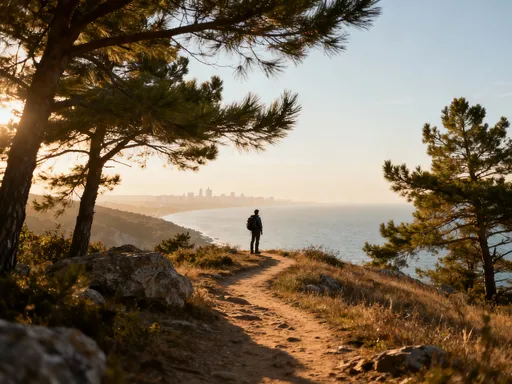
Safety is important when hiking Devil’s Peak, as some sections are remote and poorly lit at night. It’s best to go during daylight hours, ideally with a small group or guide. Avoid unmarked paths and always inform someone of your route. Bring water, sun protection, and a map—cell service can be spotty. While the summit rewards with sweeping views of the eastern suburbs and False Bay, the true value of the hike lies in its atmosphere: contemplative, grounding, and deeply connected to the land’s layered past.
Muizenberg to Kalk Bay: Coastal Lookouts with Soul
On the eastern edge of the Cape Peninsula, the False Bay coastline unfolds in a series of charming fishing villages where ocean rhythms shape daily life. Muizenberg, with its iconic candy-striped bathing huts, marks the beginning of this stretch—a place known for beginner-friendly surf and a relaxed, inclusive vibe. Just a short train ride south, Kalk Bay emerges as a working harbor where fishermen mend nets, unload catches, and share stories over steaming cups of coffee. From elevated viewpoints along the train line or coastal cliffs, travelers can take in the full character of this region: a blend of Afrikaans, Xhosa, and Cape Malay cultures, all shaped by the sea.
The fishing traditions here run deep. Generations of families have earned their livelihood from the cold Benguela Current, which brings nutrient-rich waters and abundant marine life. Line fishing, crayfishing, and tidal pool harvesting are not just economic activities—they are cultural practices passed down through oral instruction and hands-on learning. Today, these traditions intersect with growing efforts in marine conservation. Local cooperatives work with scientists to monitor fish stocks, protect breeding zones, and promote sustainable harvesting methods. The result is a model of community-based stewardship that honors both heritage and ecology.
Visitors can experience this blend of culture and nature at places like the St. James tidal pool, a beautifully maintained rock pool surrounded by pastel-colored cottages. Locals swim here year-round, braving chilly waters with enthusiasm. Nearby, the Kalk Bay Harbour viewpoint offers a front-row seat to the working life of the port. Watching boats come in at sunrise, smelling the salt and seaweed, hearing the cry of gulls and the clatter of crates—all of it forms a living tableau of coastal resilience. Cafés along the harbor serve fresh line fish with samp and beans or chakalaka, dishes that reflect the region’s multicultural palate.
The train ride between Cape Town and Simon’s Town is one of the most scenic in the world, offering continuous views of the coastline. Many travelers now use it as a slow-tourism experience, getting off at different stops to explore on foot. Conductors are often happy to chat, sharing anecdotes about the area’s history and changes over time. By engaging respectfully—with curiosity, patience, and a willingness to learn—visitors become part of a broader story of connection between people and place.
Conclusion: Seeing Cape Town with New Eyes
Cape Town’s most unforgettable views are not measured in meters above sea level, but in moments of human connection. Each summit, hillside, and coastal overlook carries echoes of history, expressions of identity, and acts of resilience. To climb these heights is not merely to conquer terrain, but to open oneself to stories that have shaped a nation. The drumbeats on Lion’s Head, the colors of Bo-Kaap, the quiet work of youth on Devil’s Peak, the rhythm of the tides in Kalk Bay—these are the threads that weave together the fabric of this city.
Travelers who approach Cape Town with curiosity and respect discover that true beauty lies not just in what they see, but in what they come to understand. The mountain is not just a backdrop; it is a teacher. The ocean is not just a view; it is a source of life. The people are not just part of the scenery; they are the heart of the story. When we look down from these heights, we are invited to look deeper—into the past, into the present, and into our own capacity for empathy and growth.
So go ahead: plan your hike, book your guide, pack your water and warm jacket. But before you ascend, pause. Listen. Ask yourself not just where you are going, but why. Let Cape Town’s elevated perspectives change more than your vantage point—let them change the way you travel. Carry forward a practice of mindful exploration, where every step honors the land and the lives lived upon it. Because in the end, the most powerful journey is not the one that takes you to the top of the world, but the one that opens your heart to the world as it truly is.