What Hallstatt’s Iconic Buildings Hide Inside Will Shock You
Nestled between mirror-like lake waters and towering alpine peaks, Hallstatt, Austria, feels like stepping into a fairy tale. But beyond its postcard-perfect facades lies something even more delicious—food woven into the soul of its landmark buildings. From centuries-old inns to lakeside taverns built into rock faces, I discovered how history and flavor collide in the most unexpected ways. This is not just sightseeing—it’s tasting history. Every cobblestone path, every weathered timber beam, tells a story not only of survival and craftsmanship but of shared meals, family recipes, and traditions simmered over generations. In Hallstatt, architecture is not merely preserved—it is lived in, breathed through, and served on a plate.
First Glimpse: Arriving in Hallstatt and the Immediate Impact of Its Architecture
As the ferry glides toward the lakeshore of Hallstätter See, the village emerges like a painted dream suspended between water and sky. The narrow strip of land wedged between the steep Dachstein mountains and the glassy expanse of the lake forces buildings to rise vertically, one beside the other, their colorful facades stacked tightly like pages in a well-loved book. This is not urban planning by choice, but by necessity—Hallstatt has always been a place where space was precious, and every inch of ground carefully considered. The moment visitors step off the boat, they are walking not just into a destination, but into a timeline. Houses dating back to the 16th and 17th centuries line the shore, their overhanging eaves and flower-laden balconies casting dappled shadows on the cobblestones below.
The iconic Church Tower with its slender spire stands as a silent sentinel over the village, its bones rooted deep in the 15th century. This Gothic landmark, perched above a cluster of historic homes, is one of the first visual anchors for travelers, offering a panoramic view that encapsulates Hallstatt’s breathtaking geography. The churchyard, with its centuries-old ossuary, reminds visitors that this place has long been a crossroads of life, labor, and legacy. Yet, unlike many preserved towns that feel like museum pieces, Hallstatt pulses with life. Children run past timber-framed shops, elders sip coffee on sunlit benches, and the aroma of baking bread curls through the morning air—proof that heritage here is not frozen, but flourishing.
UNESCO recognition in 1997 was not merely an honor; it was a commitment to preservation. Hallstatt’s inclusion on the World Heritage list ensured that new construction would respect historical continuity, that materials and architectural styles would remain authentic, and that the village’s unique relationship with its natural surroundings would be protected. This matters profoundly for cultural immersion. When visitors walk through Hallstatt, they are not observing a replica—they are stepping into a living community where architecture is not a backdrop but a daily reality. The narrow alleys, the steep staircases carved into the mountainside, the way homes are built into rock ledges—all of these elements shape how people move, gather, and eat. And in Hallstatt, eating is as much a part of the landscape as the lake itself.
The Heartbeat of Hallstatt: Food as Cultural Heritage in Historic Spaces
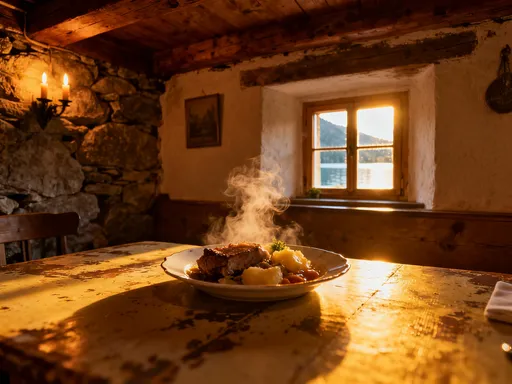
In Hallstatt, food is not just sustenance; it is memory made edible. The village’s culinary traditions are deeply interwoven with its physical structures, each meal served within walls that have witnessed centuries of change. Traditional Austrian cuisine thrives in original timber-framed buildings, where thick wooden beams, uneven floors, and flickering candlelight create an atmosphere that feels both intimate and timeless. These are not themed restaurants designed for tourists—they are working inns, family-run taverns, and village bakeries that have operated for generations, often in the same buildings where ancestors once gathered around the hearth.
One such example is a long-standing guesthouse near the market square, where the current proprietors are the fifth generation to run the establishment. The menu remains remarkably consistent: hearty beef goulash served with buttery spaetzle, warm apple strudel dusted with powdered sugar, and local cheeses aged in mountain cellars. The recipes, handwritten in a leather-bound book, are passed down like heirlooms. Dining in the main hall, where vaulted ceilings echo with soft conversation and the scent of woodsmoke lingers, feels different because it *is* different. These are not recreated experiences; they are continuations of a way of life. The wooden tables bear the scratches of decades, the windows are slightly wavy with age, and the food arrives on porcelain that has been chipped and cherished in equal measure.
What makes Hallstatt’s culinary culture so compelling is its authenticity. In an age of globalized menus and fast-food replication, the village stands as a testament to culinary continuity. Meals are not rushed; they are rituals. A midday lunch might stretch into three courses, each introduced with a brief explanation from the server—often a family member—who speaks with quiet pride about the origins of the dish. A plate of dumplings, for instance, may be traced back to a great-grandmother’s recipe, perfected over years of Sunday suppers. The architecture amplifies this sense of lineage. Sitting in a room where the same family has served meals since the 1800s creates a rare emotional resonance—a feeling of being welcomed not just as a guest, but as part of an ongoing story.
From Cellar to Table: How Historic Buildings Influence Modern Dining Experiences
One of the most fascinating aspects of Hallstatt’s dining culture is how the village’s historical infrastructure has been repurposed to enhance modern gastronomy. Many of the buildings that once served industrial or domestic functions now host intimate dining spaces, their original features lending a unique sensory dimension to the experience. Particularly striking are the former storage cellars—cool, dimly lit chambers carved into the rock or tucked beneath homes—that now function as restaurants. These spaces, originally used to store salt, dried meats, and fermented vegetables, offer natural insulation, maintaining a consistent temperature year-round. Today, they provide the perfect environment for aging wine, preserving local cheeses, and creating a dining ambiance unlike any other.
The sensory impact of eating in such a space is profound. Low ceilings press gently overhead, stone walls absorb sound, and candlelight dances across ancient mortar. These elements do more than set a mood—they subtly influence taste perception. Studies in environmental psychology suggest that dim lighting and ambient warmth can enhance the enjoyment of rich, savory foods, and Hallstatt’s cellar restaurants intuitively embody this principle. The absence of artificial lighting, the quiet hum of conversation, and the earthy scent of stone and wood all work together to heighten the diner’s focus on flavor. A bite of smoked trout, served with a dollop of horseradish cream and fresh dill, tastes deeper, more resonant, in this setting.
One lakeside eatery, partially built over the water on original wooden pilings, exemplifies this seamless fusion of history and cuisine. Accessible by a narrow wooden walkway, the restaurant occupies a structure that has stood for over 200 years, its foundation reinforced but never replaced. The menu features trout caught daily from Hallstätter See, prepared using a method unchanged since the 19th century: lightly pan-seared in butter, seasoned with salt and herbs, and served with boiled potatoes and a crisp green salad. The simplicity of the dish belies its significance—it is a direct link to the village’s fishing heritage, a culinary tradition sustained by geography and generations of knowledge. Eating here, with the gentle lap of water beneath the floorboards and the mountains rising in the distance, is not just a meal—it is an immersion in place and time.
Landmark Eateries: Where Architecture and Flavor Truly Merge
Several real and well-preserved establishments in Hallstatt serve as living testaments to the village’s architectural and culinary heritage. These are not merely restaurants; they are cultural landmarks where every element—from the layout to the tableware—reflects a deep respect for tradition. One such venue, located in a 16th-century merchant’s house, features vaulted ceilings supported by hand-carved wooden beams, their surfaces darkened by centuries of exposure to woodsmoke and candle soot. The dining room, once a trading hall, now hosts guests who come not only for the food but for the atmosphere—a rare opportunity to eat within walls that have stood for more than 400 years.
The menu at this establishment is carefully curated to reflect regional specialties. A signature dish is käsekrainer dumplings—soft, pillowy dumplings stuffed with melted Alpine cheese and served in a rich broth made from bone stock and fresh herbs. The recipe is believed to have originated in the 1700s, passed down through the family that still operates the inn. Diners seated near the large windows enjoy panoramic views of the Echerntal Valley, where wildflowers bloom in summer and snow dusts the peaks in winter. The connection between landscape and plate is unmistakable: the cheese comes from a nearby dairy, the herbs are foraged from the mountainside, and the broth simmers for hours using methods unchanged for generations.
Another notable location is a centuries-old inn renowned for its on-site distillation of fruit schnapps. In a small, wood-paneled room behind the main bar, copper stills—some over a century old—are used to produce small-batch schnapps from locally grown plums, apples, and pears. Guests are often invited to sample a shot after dinner, served in tiny engraved glasses that have been used for decades. The ritual of drinking schnapps here is not about intoxication but about continuity—a moment of pause, a toast to the past, and a gesture of welcome. The inn’s thick stone walls, narrow staircases, and flickering lanterns all contribute to an atmosphere that feels both timeless and deeply personal.
Beyond the Postcard: Finding Authentic Food Moments Off the Main Path
While Hallstatt’s main promenade draws thousands of visitors each day, the most authentic culinary experiences often lie just beyond the tourist trail. Hidden courtyards, tucked behind unassuming doorways, lead to small, family-run cafes where the pace is slower and the connections more genuine. These spaces are frequently overlooked by day-trippers, who linger only long enough for a photo before boarding the next ferry. But for those willing to explore, these tucked-away spots offer a different side of Hallstatt—one defined not by crowds, but by community.
One such discovery is a quiet courtyard cafe accessed through a narrow archway near the old schoolhouse. The space, once a stable, has been converted into a cozy dining area with wooden benches and climbing ivy. Here, a local family serves homemade linzertorte, a traditional Austrian pastry made with ground nuts, raspberry jam, and a delicate lattice crust. The recipe, the owner explains, comes from her grandmother, who baked it every Sunday during the winter months. On the day of my visit, I was invited to join a small gathering of villagers who had come for afternoon coffee. As we shared stories and slices of cake, the conversation turned to memories of winter festivals, summer hikes, and the changing seasons on the lake. It was not a performance for tourists—it was a moment of real connection, made possible by the intimacy of the setting.
Avoiding tourist traps while still enjoying iconic settings requires thoughtful planning. Visiting early in the morning or later in the evening, when most tour groups have departed, allows for a more relaxed experience. Some of the best meals I had were during quiet dinners at lakeside inns, where the only sounds were the rustle of leaves and the occasional call of a waterbird. Seeking out lesser-known entrances to popular spots—such as side alleys or back staircases—can also lead to unexpected discoveries. A simple knock on a weathered wooden door, followed by a warm invitation inside, can open the door to a meal that feels not just delicious, but meaningful.
Practical Magic: Planning Your Own Hallstatt Food & Architecture Journey
For travelers seeking to experience Hallstatt’s unique fusion of food and architecture, timing and preparation are key. The best months to visit are late spring (May to June) and early autumn (September to October), when the weather is mild, the crowds are thinner, and the natural beauty of the region is at its peak. July and August, while vibrant, bring a surge of tourists that can make dining reservations essential and narrow streets congested. Arriving by ferry not only offers the most scenic introduction to the village but also aligns with the traditional mode of access used for centuries. The short ride across Hallstätter See provides a breathtaking approach, allowing visitors to take in the full scale of the village before stepping onto the dock.
Navigating Hallstatt’s narrow streets requires patience and respect. Vehicles are restricted in the core area, and pedestrians share the space with delivery carts and service vehicles. Comfortable walking shoes are a must, as are small backpacks for carrying purchases or picnic supplies. Many visitors enjoy combining a lakeside walk with a progressive tasting tour, moving from one historic building to the next while sampling regional specialties. A suggested route might begin at the market square, where fresh bread and pastries are available from a centuries-old bakery, then continue to a cellar restaurant for lunch, followed by a mid-afternoon stop at a hidden courtyard cafe, and culminate in a dinner at a landmark inn with views of the lake.
Reservations are recommended for dinner, especially at popular establishments, and it is wise to inquire in advance about seasonal menus and local specialties. Many restaurants offer tasting menus that highlight regional ingredients, providing a curated journey through Hallstatt’s culinary heritage. For those interested in deeper engagement, some inns offer short cooking demonstrations or heritage talks, where guests can learn about traditional methods and historical context. These experiences, though modest, add depth to the visit and foster a greater appreciation for the village’s living culture.
Why This Fusion Matters: Preserving Taste, Time, and Place
Hallstatt’s true magic lies not in its picture-perfect appearance, but in its ability to preserve not just buildings, but the life within them. The village is a rare example of cultural continuity, where architecture, cuisine, and community are inseparable. Each meal served in a centuries-old inn, each recipe passed from one generation to the next, is an act of preservation—a quiet resistance to homogenization and loss. In a world where global chains and digital convenience threaten local traditions, Hallstatt stands as a reminder that heritage is not only worth protecting, but worth savoring.
The global importance of preserving culinary traditions within authentic environments cannot be overstated. Food is one of the most intimate forms of cultural expression, and when it is experienced in the spaces where it evolved, its meaning deepens. A dumpling eaten in a 400-year-old house carries more than flavor—it carries memory, identity, and belonging. Hallstatt demonstrates that preservation is not about freezing time, but about allowing it to flow forward, carrying the past with it. The village’s commitment to authenticity—its refusal to sacrifice substance for spectacle—offers a model for other heritage sites around the world.
In the end, Hallstatt is not just a place to see. It is a place to taste, to touch, to inhabit. It invites visitors to slow down, to listen, and to eat with intention. Every bite is a connection—to the land, to history, to people who have lived and cooked and celebrated in the same spaces for generations. To visit Hallstatt is to understand that the most enduring landmarks are not just made of stone and timber, but of stories, recipes, and shared meals. It is a place where the past is not behind glass, but on the table, waiting to be tasted—one historic bite at a time.